Tuesday, 22 February 2011

What Does a Weather Alert for ‘Costeros’ in Tenerife Actually Mean?

You’re about to visit somewhere like Puerto de la Cruz, Garachico or Bajamar/Punta de Hidalgo and happen to stumble across weather reports talking about yellow and orange weather alerts for wild or rough seas in the north of Tenerife.

The excitement that had built up thinking about escaping Blighty for somewhere much, much warmer drains away and you kick yourself for choosing the north of Tenerife instead of the south.

If that's the case don’t be too disheartened, I’m going to share a bit of information that even some people who live on Tenerife don’t know.  Weather alerts for costeros, as they’re called by the Spanish Meteorological Office, doesn’t mean bad weather in the way you may think; often it doesn’t even mean wild seas as some believe.

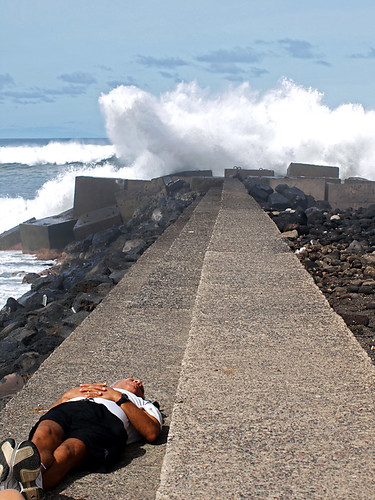
On days when we have alerts for costeros, the weather on land can be sunny and warm and even the sea can be relatively calm…except where it meets the shore that is.

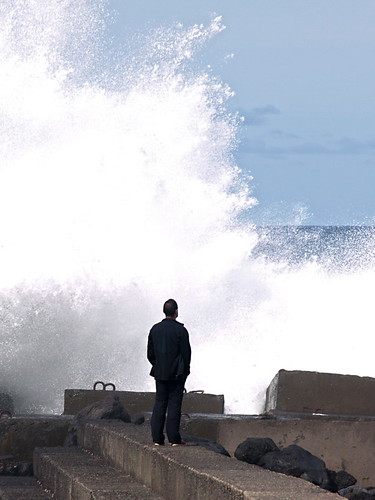
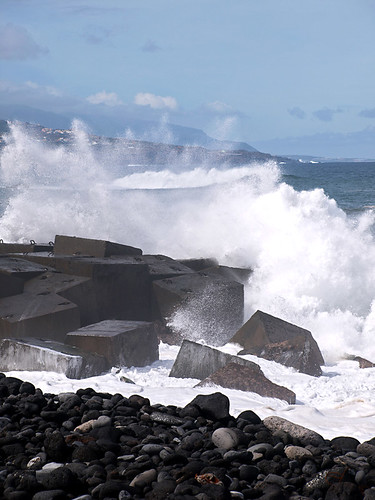
Most of the time the alert only involves huge Atlantic rollers that create waves of anything up to 8 metres in height. One of these even has a name – El Bravo - and word of its pending arrival attracts surfers from all over Europe to Punta Brava where the monster wave seems to always attack.
 Alerts are common at this time of year and the sea can give Tenerife’s coast, especially in the north, a right old pounding. But, unless you were planning on spending most of your time in the water, the chances are that these types of weather alerts won’t impact on your holiday.

For sunbathers, it does mean keeping one eye out for a rogue wave…and not laying out your towel too close to the shoreline unless grabbing your belongings and making a dash for it with the sea on your tail is your idea of fun.
Lifeguards are excellent at spotting a big one from way off and will warn sunbathers if they think a wave is going to come further up the beach than is usual.
In the north of Tenerife we tend to view these huge waves as something to be enjoyed…from a distance (unless you’re a surfer). Watching this incredible force of nature is mesmerising and there can be a temptation to get as close as possible to where they break to get that ‘killer’ shot. And I use the term ‘killer’ very deliberately. Every time we have these alerts hordes of people ignore the police tape on the sea wall to get that little bit closer and every year people are swept off the wall.

Employ common sense and a healthy respect for the sea and you’ll find that being in Tenerife when there’s an alert for costeros doesn’t ruin your holiday.

Quite the opposite in fact; as well as warm weather you’ll get to see some spectacular shows courtesy of Mother Nature as a bonus.

Thursday, 3 February 2011

Should You Speak Spanish in Tenerife?

Do you need to be able speak some Spanish when visiting Tenerife? Not if you’re staying in a resort you don’t. Outside of the resorts is a very different story but that's another blog in itself.
The real question is should you attempt to speak Spanish when visiting Tenerife? My view is that the answer to that should be a resounding YES.

Answering people in any country in their own language, even if it’s only thanks, please, good morning etc isn’t only respectful, it usually means that you’ll get treated differently and suddenly that grumpy faced waiter becomes all smiley and charming…most of the time.

But we British can be wary of attempting it. Sometimes it’s because we’re a wee bit scared, sometimes it’s because we’re a bit embarrassed, sometimes we think we just sound funny and sometimes we’re worried about making mistakes and being thought of as stupid, especially if we’re in the company of someone who can actually speak a bit of Spanish.

There was a couple of instances in the last week which brought the last point home to me and made me think back to our first months on Tenerife.

Andy and I studied Spanish at night school at the Cervantes Centre in Manchester for a year before moving to Tenerife. The reality of trying to communicate for real in situ compared to in a classroom, even with a native Spanish speaker teacher, proved daunting. Our confidence, not helped by the fact that the words being spoken to us didn’t sound like the words spoken by our tutors, plummeted.

We found that we were at our worst when our friend Jo from La Gomera visited. Living on La Gomera, Jo has a good grasp of Canarian Spanish and when we visited restaurants and bars even here in the resort town of Puerto de la Cruz, we sort of clammed up and let her do all the talking as though we were afraid that we’d look foolish when we got it wrong.

Nowadays, whilst nowhere near as competent in Spanish as either of us would like to be, we’re less worried about making mistakes. We’re consciously incompetent in Spanish, but most of the time can ‘get it over the net’ and mostly understand when it’s returned…as long as it’s the words aren’t whizzing towards us. ‘Más despacio, por favor’ is a commonly used phrase.

Recently we’ve noticed the ‘Jo’ syndrome in reverse. On La Palma with two well travelled friends we realised that when it came to ordering, our friends sort of whispered what they wanted to us and left us to tell the waiter. These are confident, smart people who have travelled the world and managed to get by without a problem everywhere, but because we could speak some Spanish they deferred to us.

When we realised this we encouraged them to try ordering themselves. Unfortunately at the time we were in a busy workers' café at breakfast. As Linda ordered a ‘zumo naransha pekeena’ (zumo naranja pequeña - small orange juice) the waiter looked at her bemused; when she giggled at this, the bemusement turned to a glower. It wasn’t the most confidence inspiring reaction so might have been a bit counter productive, but usually on Tenerife people don’t react like that.

Jump forward to last weekend at the San Abad fiesta in La Matanza. We took our friend Bob up into the hills to witness this gathering of animals, farmers and caballeros. Bob visits Tenerife every winter and when it comes to Spanish he’s not afraid of getting it wrong. He will try to communicate with anyone and is more often than not rewarded with a smile. He’s a prime example of someone who has picked up a lot of Spanish words and isn’t afraid to try them out; subsequently people respond accordingly.

However the hills of La Matanza are way off the beaten track. If there were more than 5 non Canarios in the thousands of people at the fiesta I’d be surprised. Mostly it was just farmers and when it was Bob’s turn to squeeze in amongst the cowboy hat wearing and slightly merry locals at the makeshift guachinche, Bob thrust a five spot in my direction. Andy and I laughed and said ‘get out of here; you can speak enough Spanish to order.’
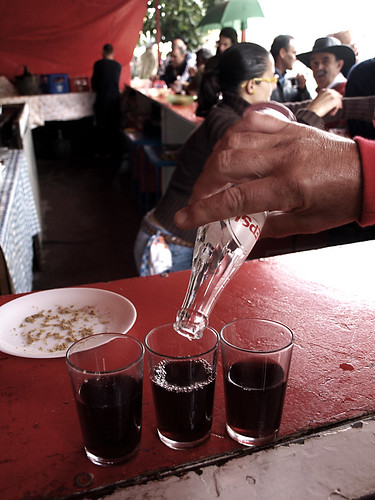
So Bob ordered some wine and then we ordered some food and another small carafe of wine. When we finished the barman placed a complimentary carafe of wine in front of us with a smile and when we finished that one he brought another. I’ve no doubt that it was because not only were we extranjeros who’d turned out on a dull and dreary day to see his fiesta, but also that all three of us had spoken to him in his own language.

And the moral of all this is: Try using a few Spanish words and you never know what the result will be. At the very least you will have a different experience of Tenerife from those who don’t.

JM
Tuesday, 25 January 2011

Looking for an Authentic Canarian Resort on Tenerife

A regular question that pops up from would-be visitors to Tenerife is a variation of ‘I’m looking for an authentic Canarian (Spanish) town to stay in. Where should I choose?’


The first time we heard this question we answered it we thought it meant that the person asking wanted a really authentic Canarian town and so came back with Garachico if they wanted to stay on the coast and La Orotava if they were happy to stay inland a bit.
In the end they opted for Costa del Silencio - not a place I’d have ever included in an answer about authentic Canarian resorts except maybe to say not to go there. 
 That was one of our first lessons in learning that it was important to understand what people actually meant when they said they wanted ‘authentic’.
It’s quite amazing the number of people who indicate they want somewhere with a Spanish feel and then opt for Golf del Sur or Los Gigantes. When they say authentic they often mean somewhere smaller and quieter than Playa de las Américas with a few traditional eateries, but also with bars and restaurants that wouldn’t feel too alien. Send them to Tacoronte or Güímar and an email of thanks for recommending truly authentic towns would probably not be forthcoming.

We now tend to be able to spot the people who really want the Orotava’s and Garachico’s – they are more likely to be very specific about what they’re after and, a bit of a generalisation here, are a bit better at researching online and send their questions to us directly.

TripAdvisor is an excellent tool for advice about the main resorts, but anyone really looking for ‘authentic’ Tenerife is unlikely to use it as a first stop. Nine times out of ten you can bet that anyone asking the question there is looking for Costa del Silencio, Golf del Sur or Los Gigantes.

But if you really are looking for a coastal resort (if you head into the hills anywhere on Tenerife you’ll soon find yourself faced with authentic) that has a Canarian atmosphere then here are some suggestions.

Alcalá – only a hop, skip and a jump away from the south western trio of Los Gigantes, Puerto Santiago and Playa de la Arena but more Canarian by far. Plenty of choice of varied restaurants for its size; life focuses around a small plaza and sunshine is a plenty. The luxury hotel Gran Meliá Palacio de Isora on the edge of town has brought in more visitors, but for now it’s Canarian through and through.

Playa San Juan – Next door to Alcalá and a bit bigger in size. Not quite as charming but with a much better beach. A decent amount of bars and restaurants, but there’s a lack of accommodation – probably why it still feels Canarian. A lot more British voices in town than there was even a few years ago.
Garachico – Truly authentic and historic town on the north west coast and one of the Canary Islands’ most charming. Plenty of restaurants and the hotels are small boutique affairs in wonderful old buildings. Busy with visitors during the day and quiet at night.

El Médano – Wind and Kite surfers’ favourite haunt on the south east coast that gets oodles of sun and a fair breeze (hence the surfers). Bohemian and laid back with a strong Canarian atmosphere. Loads of good restaurants and a few imaginative bars.

Las Galletas
– Joins on with Costa del Silencio but miles away in character. A Canarian town and small fishing community with a pleasant marina which has a few restaurants overlooking the sea and lots more on the seafront promenade. Complete shortage of hotels though.

Las Caletillas – Part of Candelaria on the east coast and a place favoured by Spanish holidaymakers. The old part of Candelaria where the Basilica stands is much more charming than the newer Las Caletillas area where the hotels are located. Both sides of town have a good selection of restaurants and some of the biggest fiestas on Tenerife take place in Candelaria.

Los Cristianos – some people might scoff at this suggestion. Los Cristianos may be the choice for a lot of mature European visitors but its soul is distinctly Canarian. Wander through the harbour in the day and head to San Telmo late at night and you’ll see what I mean.

Puerto de la Cruz – The best mix of Canarian town/ tourist resort on Tenerife (okay I’m biased…but it is) as it’s a working town as well as a tourist resort. As much, if not more so, a playground for Canarios from the Orotava Valley and around as it is visitors. Stick to the old town, join in the fiestas of which there are plenty and don’t party until after midnight and you’ll see a very different place from that experienced by visitors who frequent the handful of bars aimed at British visitors.
 Choose any of the above and you’ll be assured of a taste of Canarian life – but remember the strength of the flavour may vary slightly depending on how much you bite into it.

Tuesday, 11 January 2011

Going Native in Tenerife over the Festive Season

There’s always a lot going on over the Christmas period on Tenerife and never enough time to fit everything in. This year we were guilty of not even sending Christmas cards to some of our best friends, partly because after a number of friends and family chose the same week to escape Britain for Tenerife’s warmer climes we just ran out of time (a bit of a lame excuse I know).
Apart from the fact we were failures as friends, we enjoyed a varied and interesting festive period on Tenerife.

The Week Before Christmas
Christmas week saw two firsts for me; wild boar steaks at the Sabor Español restaurant in the Barceló Santiago Hotel in Puerto Santiago followed by getting locked in a toilet in Route 66. The first I enjoyed a lot, the latter not at all.

Sarah and Terry Lee from LiveShareTravel were exploring the island and discovering oodles of material for their website. They’d been staying at the Pearly Grey in Callao Salvaje and we met up at Garachico, halfway (sort of) between Callao and Puerto de la Cruz.
Our first two choices for lunch, El Lagar de Julio and Aristides were inexplicably closed with, in true Tenerife fashion, no explanation whatsoever – bad luck guys, you could have had Andy waxing lyrical about you on a popular UK travel site. Mind you, after seeing herself on the video taken at the Los Pinos restaurant Andy vowed she’s never going to wax lyrical on camera ever again.
After lunch we persuaded Sarah and Terry to have a quick look at the belén in the former San Francisco convent to play my favourite belén game ‘find the caganer’. But being a traditional Canarian scene and not a Middle Eastern one, the caganer was missing.
 A couple of days later with my mum, sister and her boyfriend Graeme we had much better luck at the exhibition of belénes in Puerto de la Cruz where we found not one, not two but three caganers. As a bonus one of them was doing something I’d never seen caganers do before (in the interests of decency that will just have to remain a mystery).

Christmas on Tenerife

On Christmas Eve we explored the banana plantations around Garachico in Isla Baja. Due to work commitments we haven’t been able to hoof it around Tenerife’s countryside on foot as much as we like, so it was good for soul, body and mind to wander off the beaten track again. The pit stop at the ‘unusual’ bar at the end of the walk resulted in me not only getting to drink from a bottle of cerveza but also to sip from the bloggers’ Holy Grail as well as the subsequent blog was featured on the Wordpress front page for a few days.

This year we didn’t manage to make it to Santa Cruz and La Laguna to see the Christmas decorations, but we did head up the hill to La Orotava where we were rewarded a magical display and a street exhibition of evocative metal sculptures by talented artist, Julio Nieto. Arriving at dusk was perfect as the fading light created the optimum conditions for viewing these dramatic works of art.
 
Boxing Day and it was another walk – from El Portillo to La Fortaleza in the Teide National Park. The highlight for me was climbing over a volcanic spur to be faced with La Fortaleza on one side, Mount Teide on the other and a broad sandy plain inbetween – it’s one of Tenerife’s many special vistas.

A couple of days later it was my birthday and an excuse to try out the sexy new Cofradía de Pescadores restaurant in Puerto de la Cruz. The seafood was fresh, plentiful and scrumptious and I vowed to return to try out the razorfish.

New Year and Tres Reyes on Tenerife
New Year’s Eve saw the annual grape wielding trip to Puerto harbour for a night of cava quaffing and dodgy salsa dancing (only by me I hasten to add). We had a relatively early one and ended up walking home via a pitch black dirt track through the bananas at 4.30am. It was a bit spooky, but the cava helped steady the nerves if not the feet.

We don’t normally go to the Tres Reyes parades on the 5th January. I could tell you that’s because it’s for the kiddiewinkles, but the truth is by that point we just want to chill. But this year we dragged ourselves to La Orotava… and it was a blast. I only took one hit to the forehead, courtesy of Baltasar who was launching sweets through the air as though he was trying for some sort of long distance throwing sweeties record.

The festive period ended with the first Tenerife Magazine meet up of 2011 which included social media expert and all round star Arantxa Ros. We chose the Cofradía de Pescadores again so that Tenerife Magazine’s southern representatives, John Beckley and Colin Kirby, could experience some northern hospitality and tuna steaks that were nearly as big as the plates they almost covered.

Of course this being Tenerife, this business meeting wasn’t like the often dry affairs we experienced in the UK. This was more sun, seafood, cervezas and smiles as we bitched about the bad, glowed about the good and generally discussed plans for Tenerife Magazine's world domination in 2011.

That's our festive season ‘Going Native’ style - good fun and keeps us up to date with what's happening across Tenerife.

JM

Monday, 6 December 2010

Why it's important to Research Where to Stay on Tenerife?

In these days of information overload on the internet, and when so much printed word about Tenerife has been written that it’s probably responsible for the destruction of a significant chunk of the Brazilian rain forest, it wouldn't be unreasonable to wonder why would anyone need a guide to a destination that’s been visited by millions upon millions of people?

The opening paragraph in Going Native in Tenerife says it all – ‘Tenerife is an island that attracts over 6 million visitors a year, many of whom believe they know it like the back of their hands and few of whom know it at all.’

The longer we live here, the more we stand by that statement. What amazes me, for all the information that exists in print and online, is the number of people who seem to make real clangers when choosing a resort on Tenerife.

I’ve been following an enjoyable and thought provoking blog written by someone who recently visited Tenerife. He stayed for a short part of his visit in Golf del Sur (below); a place that is, ironically, being increasingly referred to by its more Spanish sounding municipality title, San Miguel de Abona. This is how he described it:
‘The soulless expanse of cheap bars, restaurants, empty units and peripheral expatriate services was as depressing as the couples wandering slowly through it with miniature dogs, cheap wine and cheddar cheese slices.’

It made me laugh - a lot. Let’s be honest, Golf del Sur isn’t a resort for anyone seeking to immerse themselves in Tenerife’s culture. Head up the hill to the real San Miguel de Abona for that (see pic below) or even take a jaunt along the coast to el Médano. To be fair, that particular blogger did actually spend most of his time on Tenerife in a banana plantation near Garachico; a town as different from GDS as chalk is from...well, cheddar cheese slices.

However, what can be quite common is for people to book a holiday in a purpose built resort on Tenerife, spend all of their time there and then complain there’s nothing Spanish (or Canarian) about the resort, or for that matter Tenerife.
There’s nothing wrong with choosing a purpose built resort if that’s what rings someone's bell, but for those who complain afterwards about it lacking character and not having a Canarian feel, it just demonstrates that they hadn’t done their research properly.

On the other hand, who’s to say it wasn’t exactly what they were looking for and that they didn’t have a great time, but how can they admit that to friends who treat the very mention of Playa de las Américas or one of the other purpose built areas the same way they would dog dirt on the shoe? This excludes Costa Adeje which, in some part thanks to a shrewd marketing strategy, is considered more socially acceptable.

There’s also another approach people use to make resorts considered, rightly or wrongly, a bit naff more acceptable and that’s being creative with names. I’ve already mentioned the Golf del Sur transformation to San Miguel de Abona and this week I checked out a series of photos on Flickr that were titled Los Cristianos by the photographer even though they were all clearly of Las Américas - god forbid that someone admits to being there. The best example of being creative about being on Tenerife I've seen recently was a bio of someone living on the island which stated they resided in Africa. Not an out and out porky, but a hell of a spin.

The point of all this is that for all the information online about Tenerife, much of it is still misinformation - deliberate or otherwise. Some travel sites selling holidays can be ultra-creative with the truth, so that quaint little fishing village they describe is actually a series of hotels and apartments built twenty years ago and centred around a man-made postage stamp sized beach. TripAdvisor can be a good resource within limits, but it is terribly, terribly subjective. One person's 'best restaurant on Tenerife' and 'top bar on the island' can turn out to be a restaurant selling cheap as chips...err chips and a bar frequented by three people and a dog, all of them sozzled, saddle-bag coloured ex-pats (the dog included).


It’s vitally important to research thoroughly and to use good sources to avoid disappointment when picking a resort on Tenerife. For all the 'helpful' information about Tenerife online, it's still not difficult to spot what good sources are. God, as they say, is in the detail.

When we were commissioned to write Going Native we were told to be completely honest about Tenerife's towns and resorts. So we were and some places don't fare particularly well, but there shouldn't be any surprises in store for anyone armed with a copy. Similarly, when commissioned to write a series of online 'insider' guides for the travel website Tenerife.co.uk the brief was more or less 'tell it how it is'. Subsequently Tenerife.co.uk has a warts and all description of all of Tenerife's resorts and also many of its less touristy towns; something you are unlikely to find on any other travel website selling holidays .

The information is out there, so there’s no real reason for someone seeking Spanish culture on Tenerife to discover on arrival at their resort that they are assaulted by signs proclaiming ‘All day British artery clogger served here’, ‘€1 a gallon of watery beer’ or ‘Z-list celebrity who desperately needs public exposure Big Brother screened tonite’…unless secretly that’s what they really want.

JM

Tuesday, 16 November 2010

Menus in Restaurants on Tenerife, Go Spanish

I’m sure it seems terribly pretentious when we’re in restaurants on Tenerife with visiting friends when the waiter asks if we want the English or Spanish menu and we always, always ask for the Spanish menu.

But there are a number of reasons why if you can understand Spanish even a bit you should follow suit.

Okay for a start there’s the obvious; it’s a good way for picking up basic Spanish words and cooking terms for anyone who wants to learn the lingo. But there are a few other, more practical reasons.

Most menus have been translated into English by someone who doesn't speak it as a first language and that can lead to some, let’s say, misunderstandings.
Two classics we came across in a restaurant on La Gomera were these - tuna done with an iron and roast paw of the house. Unfortunately neither dish was as it sounded which was a shame; one was grilled tuna (plancha is grill, but also an iron), the other roast pork.

Apart from smile-raising mistranslations, getting it wrong can lead to culinary disappointment. One time in Regulo in Puerto de la Cruz, Andy got excited by the inclusion of fish pie on the menu. She had visions of the sort of pie we cook up at home courtesy of Rick Stein’s cookbook with three types of fish, prawns and mussels in a lip-smacking sauce topped with creamed potatoes. She was gutted when a cold, fish terrine was placed in front of her.

Just last week we were in a restaurant with my sister and her boyfriend and she fancied the sea bass on the menu. Sea bass is a fish which regularly falls foul of mistranslations. In this case a quick check of the Spanish menu revealed it was actually sama, a local fish. Often it’s the dorada fish that is described as sea bass, but it’s a wee liar; dorada is bream. What we know as sea bass is actually called lubina here.

However apart from risking disappointment, the best reason for always asking for the Spanish menu is that you might be missing out if you don’t.

Recently we ate at La Casona in Puerto, again with my sis and her boyfriend. The Spanish menu included a ‘combinado’ section which was mysteriously absent from the English menu. If you’ve never come across combinado menus, you’re missing out on a Spanish style of food presentation that would have Gordon Ramsey turning the air blue.
A combinado is as it sounds a combination. So you get bizarre couplings like a fillet of cherne (grouper) served with a pork chop separated by a mountain of chips, or chicken with steak and maybe a fried egg, or frankfurter thrown in for good measure.

Combinados might have the serious chefs holding up a crucifix to ward them off, but they’re quite good fun and perfect for anyone having an attack of indecision, especially if they like their food quite simply prepared…plus they are incredibly cheap, usually well under €10.

So asking for menus in Spanish on Tenerife might sound pretentious, but at least you can be sure of what’s going to be on your plate when it arrives.

JM
Tuesday, 9 November 2010

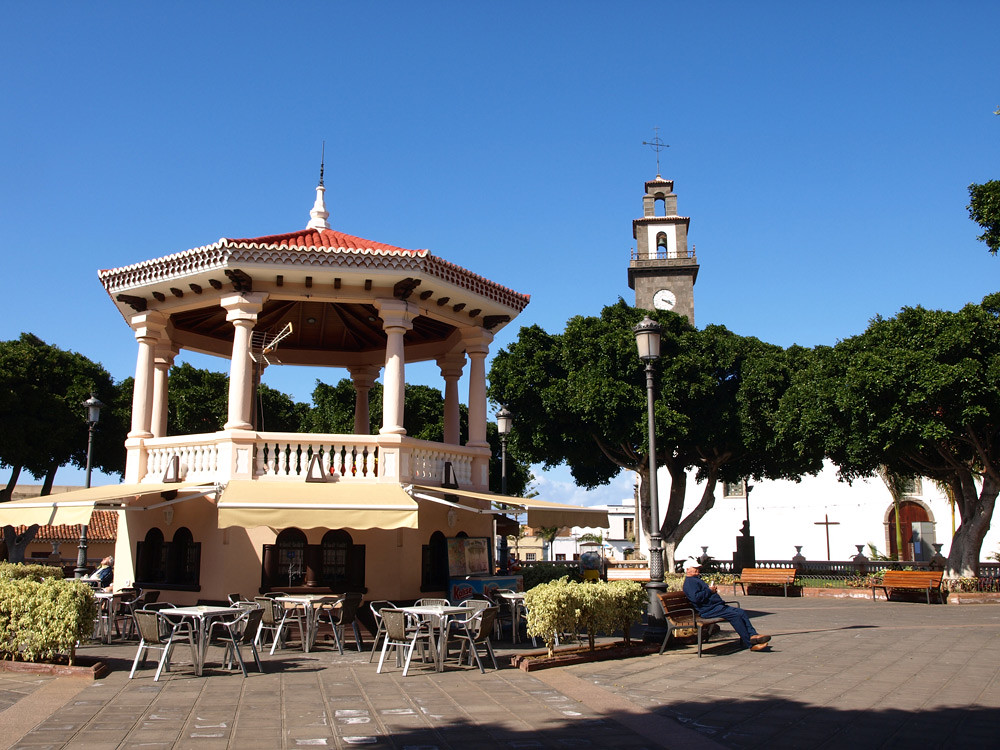
On the Trail of Tapas in Puerto de la Cruz

Tenerife is tapas trail mad at the moment. There are at least four tapas routes taking place as I type. There’s one in Guia de Isora, a cheese themed one in La Laguna, an aphrodisiac themed tapas route along the north coast and one in Puerto de la Cruz.

I knew Puerto held a tapas route at this time of year, but with typical Tenerife advance notice, this year’s wasn’t confirmed until the middle of last week. It started on the 5th November, perfectly timed to coincide with a visit from my sister and her boyfriend, Graeme.

The hardest thing about tapas routes is choosing where to start. With 37 restaurants and cafes in Puerto participating in this one, choosing a start point was always going to be a bit of a mare, especially when you added other conditions – a) there had to be two choices and b) under no conditions could any of the tapas dishes have tentacles. As an avid eater of anything with tentacles, the second condition took some of my first choices out of the picture.

Restaurant number seven on the tapas list I had printed off met all the criteria plus it was in one of our favourite ‘secret’ restaurants in Puerto, Casa Pache.
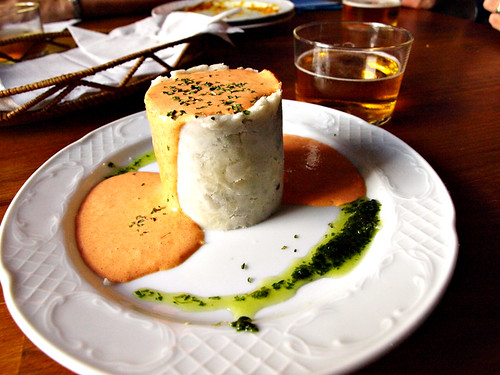
Last year they blew us away with their space dust ravioli, this year’s tapas were a bit more conventional; albóndigas con papa negra (meatballs with black potato) and the more imaginative timbale de batata con bonito (tuna in a sweet potato mould topped by a light red pepper sauce). As always the food was delish and whilst we tucked in, we formulated our tapas route.

Some places were ruled out because the only opened in the evening, others because they bizarrely stopped serving at 2pm. This being Tenerife, following a tapas route isn’t as easy as it sounds.  Our second choice, Pandorga turned out to be closed for vacations begging the question why were they on it? A sub was quickly found. Bar Cafeteria Central dished up a couple of decent sized montaditos (slices of crispy bread with spicy meat and  tuna toppings). It wasn’t fancy (typical of the type of food they serve), but it was tasty enough. Third stop proved a bit confusing. The map showed Heladería Paraíso, but the name above the restaurant and on the menus said Pinguino; what I’ve always know it by.

“Is this Heladería Paraíso?” I asked the waiter.
“Si,” came the reply.
“But the name says Pinguino?”
“Si, it’s the same place,” he smiled.
“The paradise penguin?” Andy suggested.
“Exacto,” he laughed.

Then to confuse matters further, when we ordered two tapas paraíso and two tapas Charco (don’t ask me what they were, this was our surprise option). But he informed us they didn’t have them, all they had was chicken.

This is another aspect of some tapas routes. You don’t always get what is on the list; it sort of adds to the adventure of the whole thing. As it turned out their shredded chicken in sauce tapas was rather imaginatively presented and tasted as good as it looked.

For our final stop – although not stuffed, the beer with each tapas (€2.50 for tapas an drink) was proving conducive to making us want to practice that most Spanish of traditions, the siesta – we chose local police haunt Maga.

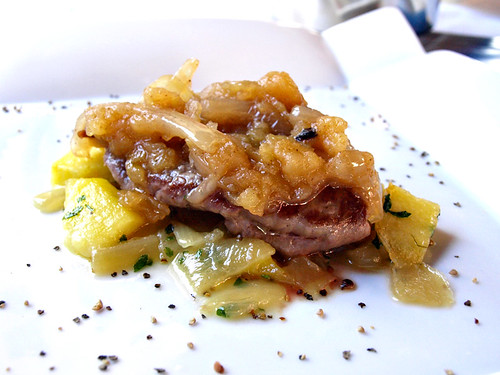
I liked the parrot fish mousse a lot, but the second offering turned out to be the tastiest tapas we’d tried all day. Fillet of pork with apple and sweet potato. They might not sound like obvious companions, but their flavours complemented each other brilliantly. It was a satisfactory end to our tapas trail. Or should I say temporary end. The tapas route continues until the 28th November and having been denied my tentacle hit, there are quite a few tapas that I still want to try out including the stuffed cuttlefish at El Establo and the octopus and potatoes at Lo Que Me Gusta…

JM

Tuesday, 26 October 2010

What Does Going Native in Tenerife Actually Mean?


Going Native in Tenerife might mean different things to different people but for us it means having the type of experiences that the Canarios enjoy throughout the year.

However, it doesn't have to mean going to a remote location where you're the only tourist. The real Tenerife (not purpose built for tourism) is found everywhere, even in some of the main resorts if you look for it.

When we published our first guidebook about Tenerife, Island Drives, someone commented to me 'Tenerife doesn't need another guidebook'. Obviously we had a different point of view otherwise we wouldn't have bothered and here's why.

My copy of the Rough Guide completely omitted huge chunks of the north coast between Puerto de la Cruz and La Laguna – the route that every traveller pre mass tourism journeyed. A walking guidebook for Tenerife I bought incredibly didn't mention the Anaga Mountains at all. Nobody seemed to be writing about what being at a fiesta was really like so I didn't know about what actually happened on the night of San Juan, or at the bathing of the goats in Puerto harbour, and I certainly didn't know that thousands upon thousands of people and animals descended on towns I'd never heard off to celebrate obscure saints. Nobody mentioned that there were loads of free music festivals and the best of original live music and most buzzing nocturnal scenes weren't necessarily in the places frequented by tourists. Whilst travel articles in British newspapers seemed to be all about the new Tenerife being luxury hotels on the south west coast, the old Tenerife was going about its business more or less ignored and subsequently it was generally only the Canarios who were going to all the really interesting events - it still is. Whenever the 'old' Tenerife was mentioned in the same papers it would more often than not be Garachico or, if the author was being really adventurous, Roque de las Bodegas; both of which which were (are) sometimes described as though Atlantis had just been discovered...despite being favourite coach excursion stops.

The point is that everybody was writing about almost exactly the same thing and although Spanish  speakers knew about all of the juiciest stuff, most of what really made Tenerife tick was still a secret to us English speakers.

Writing for Living Tenerife for four years involved researching small towns, sitting in libraries and talking to people in town halls and cultural centres etc. The experience opened our eyes to all the things that rarely if ever made it onto the printed page in English and so our guidebooks and numerous blogs were born.

There's far too much happening on Tenerife to cover all the interesting events in one guidebook. However, Going Native in Tenerife includes what we consider to be the best of what we think it means to go native here, along with tips and advice to help people visiting Tenerife for a week, fortnight, month or longer experience the Tenerife that the Canarios know and love.

Thursday, 14 October 2010

Is it Quiet on Tenerife?


A couple of weeks ago we were in a bar in Puerto de la Cruz watching Manchester United sneak a win against Valencia in the Champion's League.
The bar wasn't busy and the Canarian barman commented, “I thought that we'd have a lot more people in to watch Manchester United.”
We just smiled and said nothing because ever year at this time he makes exactly the same comment.

Puerto de la Cruz is busy throughout the summer with Spanish mainlanders who abandon the resort as soon as their children return to school in September. The British winter visitors don't really hit full swing until later in October. And in the period in between there is always a bit of a lull in bars aimed at a British clientèle rather than local residents (actually there's a lull for the whole of the summer in bars aimed at the Brits in Puerto). Subsequently, the bar isn't full for football games at this time of year (exact same thing happens after Easter). This pattern, (not picked up on by everyone it seems) plays out year after year as sure as night follows day. Last year, however, it was different in as much as even during high British season it never really got as busy in the bar as it had been in previous years – the crisis bit deep.

But have times changed and corners been turned on Tenerife?

Recently we were in Playa de las Américas covering amongst a number of things, nightlife in the resort. The area around the Safari centre was relatively busy, but the strip of cabaret bars at Parque de la Paz were packed to capacity with people. At some bars it was standing room only whilst others we couldn't even get into. It was great to see and suggested that in tourist terms, things were looking healthy around that area anyway. Similarly when we moved on to the 'Patch', two of the three bars we went to there were also packed. There were bars that were quiet, but to be cruelly honest, they looked dire.

During the weekend we met with the manager of the Mare Nostrum Resort and the manager of the Arona Gran Hotel in Los Cristianos. One had 96% occupancy, the other 85% occupancy.  Facts that paint a promising picture.

We also receive official tourism statistics from the Tenerife government and these show that visitors to Tenerife are up around 8% more than last year; mainly in the south of Tenerife. The north (i.e. Puerto de la Cruz) is still experiencing a tourism crisis for a number of reasons. But unless you frequent the few bars aimed at the Brits, you don't notice it in the same way you would at a purpose built resort. There are even less tourists in La Laguna and Santa Cruz, but you wouldn't class either as being quiet. Places on Tenerife that have a large resident Canarian population are never quiet. In fact if you're the sort of independent traveller that likes to immerse yourself in local culture that isn't touristy, the diminishing British tourists might even be a plus point.

Overall though from a tourism point of view, the signs are all there that the future is looking brighter than it has for a couple of years. However, that doesn't mean that everything in the garden is ever going to be rosy again.

But back to the question is it quiet on Tenerife? If you're going to a small purpose built resort with a couple of AI hotels, then yes. If you're going to a northern resort and looking for the Brit scene then yes again..and if you're going to a rural out-of-the-way location then hell yes. On the other hand if you're going to the cabaret capital of Tenerife in the south, or sticking to fiestas and where the locals go in the north then quiet is definitely not a word that will spring to mind.

And if it does, you've cocked up your research...and it serves you right for not buying Going Native in Tenerife.

JM

Wednesday, 22 September 2010

Is Playa de las Américas just Blackpool in the Sun?

Playa de las Américas – people either love it or loathe it. It is often described as Blackpool in the sun; a place where chavs and chavettes go to try to drink themselves to death, picking up the occasional STD in the process whilst gorging on all-day breakfasts served with a pint of beer and a packet of Bennies.

That's the way the media had portrayed it and that's the image I had of it. Even after I moved here I treated the place like Will Smith's New York in I Am Legend; a place to be visited with extreme caution during the day and totally avoided at night.

When it came to having bias against Playa de las Américas, I was at the head of the queue. I looked down from my elevated position in the authentic north at what to me amounted to a theme park; a Sodom and Gomorrah that had nothing much in common with Tenerife, but which infected the whole island with its tacky reputation. I despised it for that crime.

In my mind it was made up of no more than cheap tourist shops, Brit restaurants that served meals straight from Birds Eye's packets and run-down bars selling watered down beer whose mock Tudor décor (if it was as sophisticated as that) went out of fashion quarter of a century ago in the UK.


But then I started writing about the island and that meant having to visit places that I wouldn't normally have chosen to spend time in; places like Playa de las Américas. Because like many, many, many people my vision of Playa de las Américas had been formed not by experience, but by what I'd read and heard about it.

The reality was far removed from the image I expected – I found sophisticated restaurants, smart avenues, style bars, tastefully luxurious hotels and well dressed visitors representing a whole host of European nations. Even its beaches surprised me – Las Vistas, considered by some (not me) to be the best beach on Tenerife, Camisón (a better beach in my view) and the surf dude scene at Playa Honda. Much of its sea front promenade was lined with modern sculptures, ideal for a romantic sunset stroll.
What I didn't encounter was the Britain in the sun I'd expected. Parts of it were over the top in a kitsch sort of way, but I don't mind that – I'd much rather have outrageous Las Vegas style pizazz than unmemorable mediocrity.

Maybe there are some people out there who know (or knew) Playa de las Américas who are guffawing in disbelief at this point, but let me share a couple of little things. One of the first times I visited was with a friend from the UK who had stayed in the resort quite a few years previously...and hated it. He didn't recognise it.

Recently we recommended Playa de las Américas to two friends who are unashamed travel snobs. A few years ago I would have cut off my right arm with a butter knife before doing something like that. But I know PDLA now and realise that it isn't quite the demon it is made out to be.

The other thing that has changed is that much of what was Playa de las Américas is no longer Playa de las Américas. The young upstart Costa Adeje has reclaimed areas that people once knew as PDLA. So today's PDLA definitely isn't the same. The modern PDLA only stretches from Los Cristianos to Veronica's.

Okay I've mentioned the name, so before anyone says 'AHA', I'll come clean. The old style PDLA still exists in parts and people still flock to it, but the tide has turned. It isn't what defines the resort anymore, or it shouldn't be. Costa Adeje is considered by many as the more upmarket resort. I don't necessarily agree. There are sophisticated areas and not so sophisticated (the diplomatic term) in both resorts. In fact a couple of weeks ago I saw more 'euro a pint' offers in parts of Costa Adeje than I did in PDLA.
All of this might make me sound as though I'm now PDLA's biggest fan. I'm not. It's not the sort of place I would ever choose for a holiday, but that's because I prefer places with local culture and the sort of atmosphere that comes only from being in existence for centuries. However, I do recognise that PDLA delivers exactly what it says on the packet and it does it well and also feel that it deserves a fair hearing.

What PDLA isn't, is Blackpool in the sun (unless Blackpool has completely re-invented itself as well). But if you give a dog a bad name it sticks...even if that dog has had a shampoo, cut its hair and swapped its mongrel coat for some posh designer fur.

JM
Wednesday, 1 September 2010

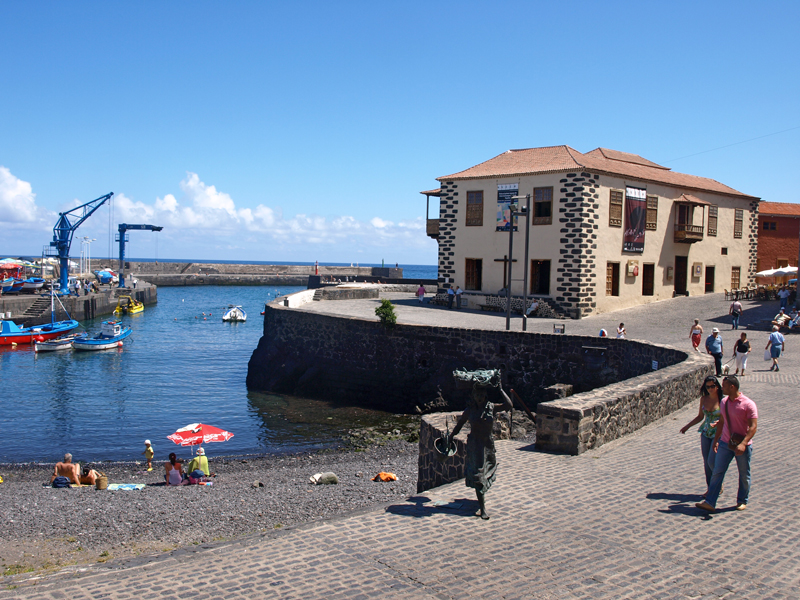
The Foreign Fields of Tenerife

The most foreign feeling country I’ve ever visited was…France. Until I visited France it had been Sri Lanka. The first time we visited Sri Lanka was a serious culture shock, there was virtually nothing that was familiar to me; from the crowds clinging to the wire fencing at the airport, road blocks manned by kids with Kalashnikovs (it was during the civil war), shanty towns amidst palm groves and children in rags whose smiles were as white as the surf, but there was the occasional Coca-Cola billboard…and the people did speak English.

France on the other hand was a shock. It was the first time I’d been anywhere where the people couldn’t, or wouldn’t speak English. Thank god for Andy’s grasp of the language and the difference that a couple of bottles of French country wine can make in helping you understand the lingo.

Tenerife on the other hand is a place which is as foreign as the La Tasca restaurant on Deansgate in Manchester…if you believed some.

On Sunday at a popular fiesta, the Corazones de Tejina (hearts of Tejina) in the north of Tenerife, the only other English speaking voices I heard were that of Tenerife blogger, Islandmomma and her friend Colleen.

Despite the thousands of British ex-pat residents and tens of thousands of British visitors who descend for their holidays on Tenerife every month, this isn’t something that’s uncommon. Recently at the Riscos del Fuego in Garachico we heard another English speaking voice and expressed surprise. That might seem an odd thing to say, but after years of visiting fiestas all over the island, some of which attract thousands upon thousands of people, it still comes as a surprise when we see or hear many other Brits at one (apart from those close to resort areas in the north and south).

By far the majority of people at most fiestas are Spanish speakers – most fiestas have their roots in a very strong communal bond and are held by the community for the community.
Why these fiestas don’t attract more British, I don’t know. They’re fun, visually enthralling and the people are always welcoming. In the past (before the internet changed the world) promoting them on Tenerife wasn’t a strong point and people have said to me in the past that they just weren’t aware of all the things that were going on. This might still be the case, especially if people don’t use the internet.
But the Corazones de Tejina had pride of place on billboards all over the tourist resorts and there were no more Brits there than on any other year I’ve been.

Fiestas aren’t everyone’s cup of tea and neither is local culture and that’s cool. We all have different likes and dislikes, but it still amazes me that on an island whose reputation has been one of being overdeveloped for tourism, that the reality is that so much of its towns and the events that take place in them are still invisible to most visitors.

The upside of this is that anyone looking for a holiday experience in a land that feels deliciously foreign with a culture that is quite fascinating and with traditions that border on the bizarre then…don’t laugh…Tenerife is your place.

And if you do happen to scoff at that suggestion, next time you’re in the area let me know and I’ll take you to a town away from the resorts and plonk you in the middle of a fiesta - if you’re still scoffing at that point, I promise to pay for the carafe of vino del país.

JM

Wednesday, 25 August 2010

Summer Carnaval in Playa de las Américas

I’ve got to admit to being a tad sceptical when I heard that a summer carnaval was going to be held in Playa de las Américas. I mean you can’t just hold a ‘carnaval’; it doesn’t work like that. Apart from the months of prep that goes into the main carnavals around the island, the furiously beating heart and soul of the carnaval spirit comes from what’s happening in the streets. Carnaval is all about holding a last wild hedonistic bash before giving up the good stuff in life for Lent…and you can’t simply replicate that with a click of the fingers and some sticky tape.

The second point which had me cringing at the idea of a summer carnaval was that I’d witnessed a ‘mock’ carnaval of sorts not so long ago when the British Guild of Travel Writers visited Tenerife. It was tacky and embarrassing and, from the comments I heard, had the opposite effect on the BGTW than that which the organisers intended.

As we were in the area we decided to head to the milla de oro (golden mile) in Playa de las Américas to have a look. The parade was due to begin at 7.30pm, but there were still cars streaming down the ‘golden mile’ at that point – so a late start at least was authentic enough.

Furthermore, the scaled down madness outside the Hotel Villa Cortes was exactly like the scenes before carnaval parades; girls from comparsa groups struggled to squeeze into tiny costumes; there were surreal elements like a tyrannosaurus rex glaring at passers-by; Fidel Castro, Charlie Chaplin, Michael Jackson and Popeye posed for photos and the animals from the movie Madagascar ran around aimlessly before being herded by a girl in skins with a bone through her hair whilst a DJ in a bar opposite blasted out the obligatory Latino music.

Eventually the parade got underway and the drums, dancing, bright costumes and bizarre characters brought the tourists from the bars to line the streets in impressive numbers.

I might have been snotty about the whole thing beforehand but although it’s not the real thing, at least it was a taster of an authentic carnaval parade. Credit to all those involved, they did it in the right spirit and the result was thoroughly enjoyable. Many visitors to the south are never going to make the trip to Santa Cruz or even Puerto de la Cruz, to see a full blown version; so at least the ‘summer carnaval’ will have given them some idea of the flamboyance and fun of carnaval in Tenerife.

However, if in a few days time I read somewhere about someone saying that, after watching the parade, they’ve ‘done’ carnaval’, you’ll be able to hear my head banging against the wall on the other side of the island.

Thursday, 19 August 2010

Where is the Real Tenerife?

That title could also have read ‘What is the real Tenerife?’ On our blogs and websites we talk a lot about the ‘Real Tenerife’, but what do we actually mean when we use that term?

We use it to differentiate between the parts of Tenerife that were built purely for tourism and the parts where people live and work and where customs and traditions stretch back centuries. This isn’t meant to suggest that one is better than the other, but it’s vitally important to let people know that they are very different worlds and have qualities that appeal to the varying likes and dislikes of people looking at Tenerife as a holiday destination .

Before we considered moving to Tenerife we had a very clear idea of what we thought Tenerife was like. This perception had been painted partly by the newspapers and partly by British TV, but some of it had also come from our own experiences passing through certain areas on the way to catch the ferry to La Gomera. Some of it had also been derived from researching English language sites on Tenerife which tended to feature topics mainly based around life and holidays in one area of Tenerife and that area was the one that most people knew and visited – the area around the main southern resorts.

It came as a surprise to us to discover that this area that most English speaking people talked about was in reality very small geographically and that most of Tenerife was quite different. I’m not talking about a north south divide here, I’m talking about anywhere at all that lies 5 minutes outside of the heart of Playa de las Américas or Costa Adeje.

If you read the Spanish press, this is obvious. The locations which feature in the main topics of conversation for many British people hardly warrant a mention in local Spanish language papers.

This was a revelation to us and once our eyes were opened to the truth, we moved to Tenerife and began to try to spread the word about this ‘real Tenerife’ that only a few people seemed to talk about.

To us the real Tenerife is a place where the traffic is stopped for goats; you wonder how people get any work done because of the amount of fiestas; if you don’t speak Spanish you’ll never be able to sort anything out; menus offer cabra, conejo and cherne; any music other than traditional Canarian or Latino is considered ‘alternative’; mas o menos is a mantra and advice from anyone other than a Canario is received in the same manner as a poisoned chalice would be. Most of the places on Tenerife we spend time in are like this.

However, someone on a Tenerife Forum said something recently that was very valid. They made a comment that to 90% of British visitors, the Tenerife of the resorts was the ‘real Tenerife’. The person might have plucked the figure from thin air, but it was an interesting and well made point that probably wasn’t too far off the mark.

You could argue that the real Tenerife is the Tenerife that each and every individual on the island experiences. To 90% of British visitors (or whatever the real figure is) the real Tenerife continues to be the tourist resorts they love and return to regularly. On the other hand, for the majority of Canarios and the Brits who venture outside of the resorts, the real Tenerife is something completely different.

If you’re one of the 90% you know exactly what you’re getting and that’s great. However, if you want to become one of the 10% who experience a different ‘real Tenerife’, venture away from the resorts and you’re in for a surprise and a treat.

It’s one of the unexpected delights of Tenerife. Mass tourism has thrived on this island for nearly half a century…and yet most of Tenerife is still a secret waiting to be discovered.

Wednesday, 21 July 2010

What Is There To Do In Tenerife?

 I keep a regular check on local forums and travel review sites like Tripadvisor to see what sort of things that people coming to Tenerife to visit or even stay are asking and saying about Tenerife.

Every so often I read comments from people who have ‘seen all there is to see on Tenerife’ (i.e. they’ve taken a coach excursion to Mount Teide, Masca, Garachico and La Orotava) or are bored because all there is the sun and the sea.

When I read these I invariably end up with a bruised chin as a result of it coming into contact with the floor.

We’ve been exploring towns, villages, hamlets, beaches, forests, ravines, caves and any old nook and cranny for nearly seven years. We’ve notched up fiestas, concerts, shows and open air raves. We’ve eaten in god knows how many restaurants across Tenerife from super cool establishments to guachinches in the middle of allotments and drank whatever the barman put in front of us in so many bars they’ve become a blur. We’ve tasted wine from the best vineyards as well as from tiny plots.  I’m not trying to prove any credentials here just merely trying to state that, partly because of the work we do and partly because we’ve always sought out new experiences, we spend a lot of time trying to discover as much as we can about this island…and I don’t feel that I’ve seen or done all there is to enjoy on Tenerife.

This month alone I haven’t seen or done anything like the things I would have wanted to. There’s still a third of the month to go and whilst I’ve watched some of the Ladies Open Golf tournament; eaten sardines to the strains of a maquinaria band; been blasted by water pistols at a fiesta and scorched by a heatwave at the Erjos pools; shed a tear as Ave Maria was sung to the Virgen del Carmen; felt too old at an open air rave; been wowed by African singer Angélique Kidjo and battled dimunitive Canarian abuelas at the start of the summer sales; cheered on Tenerife’s Pedro and Spain during the World Cup and made peach chutney with the meagre crop from our peach tree, there are far too many other things that I haven’t done.

I didn’t get to the Indian festival in Las Américas, folklore concerts and windsurfing championship in El Médano, traditions fair in Chirche, salsa concert or the Smiths night in Santa Cruz, the car rally in Adeje, the motocross championship in San Miguel, the beach fashion show in Los Cristianos, Simply Red in Costa Adeje or any of the concerts, fiestas and shenanigans that take place in the northern municipalities that you have to know about them to know about them if that makes sense.

However, before July ends I’ve still got time to enjoy the agricultural fiesta In San José, watch fireballs rolling down the hills in Garachico, see if Nelson can win the battle of Santa Cruz this time, take in the Moscow Ballet, go to the Lan party, try some sea urchins and maybe watch a couple of movies at the open air cinemas that are erected for summer.

What is there to do in Tenerife? If you go native and do what the locals do there are more things than you could ever possibly imagine. 

Tuesday, 29 June 2010

The Best Week to Visit Tenerife, Rock, Blues, Bonfires & Quaint Fiestas

If someone wanting to experience the cream of what Tenerife has to offer asked me when would be the best time for holidays on Tenerife, I wouldn't have to think for even a second before answering.

Unfortunately if you're reading this and planning a visit to Tenerife in the near future, my answer is going to be really annoying as it's the week that has just passed.

The period around the official start of summer is always full of activities as well as two of the best festivals on Tenerife's fiesta calender...and you can guarantee that the weather is going to be hot.

The week started with the European Day of Music in Puerto de la Cruz when seven bands welcomed in the summer beside the town's picturesque harbour. I've said it over and over again; if you visit a place like Puerto, you aren't going to see the best of it in a pub which caters for the British – apart from maybe The Majestic, which is a scream. On a Saturday night it's always worth checking out what's going around Plaza Charco and the harbour as that's where the real action takes place.

Anyone who does feel the need to spend their Saturday nights in a bar could always opt for the Queen Bee or the Frigata beside the harbour and get the best of both worlds.

This time of year is also a great time for walking on Tenerife. Temperatures are high, but not oppressively so and we always try to fit in a jaunt in the countryside in between the hectic nocturnal activities. This year we explored a part of the north coast near us and found fishermen's shacks beside beautiful clear rock pools.

The highlight of the week is the midsummer celebrations on the night of San Juan. These take place all over the island and are a real insight into Tenerife's true character. Even in the main resorts in the south like Playa Los Cristianos and Las Vistas, Canarian families head to the beach to make wishes and bathe in the sea after midnight for good health and fertility. It seems crazy, but I've sort of become hooked on the tradition and even though we spent this year exploring celebrations along the north coast, we had our swimming cossies under our clothes. There was no way I was going to risk the wrath of the gods, so wherever we were after midnight I was determined that my body would be bathed with the magic waters. As it turned out we ended up back at the best San Juan party on the island at Playa Jardín in Puerto de la Cruz. A rock band kept the beach bouncing as we picked our way through the crowds to the shoreline where we waited for a break in the waves so that we wouldn't be dragged to San Borondón (mythical Canarian island which turns up on San Juan)as we doused our skin in the waters.

Another magical thing in Tenerife is the time, it disappears at frightening speed and one second it's midnight, the next it's 2am. Not late for a fiesta, but it is when you want to watch el baño de las cabras (bathing of the goats) just over six hours later. Don't be put off by any misinformed suggestions that this is a cruel tradition, it isn't. It might be noisy and messy, but it isn't cruel.

One thing I learned at this year's annual goats' day out is to keep your eyes on the asses at all times. Not a bad life mantra come to think of it. As I was getting up close and personal with a few billies, a tethered mule decided to eat my trousers and clamped its jaws around my left knee.  El baño de las cabras - cruel to goats, no; cruel to photographers, yes.
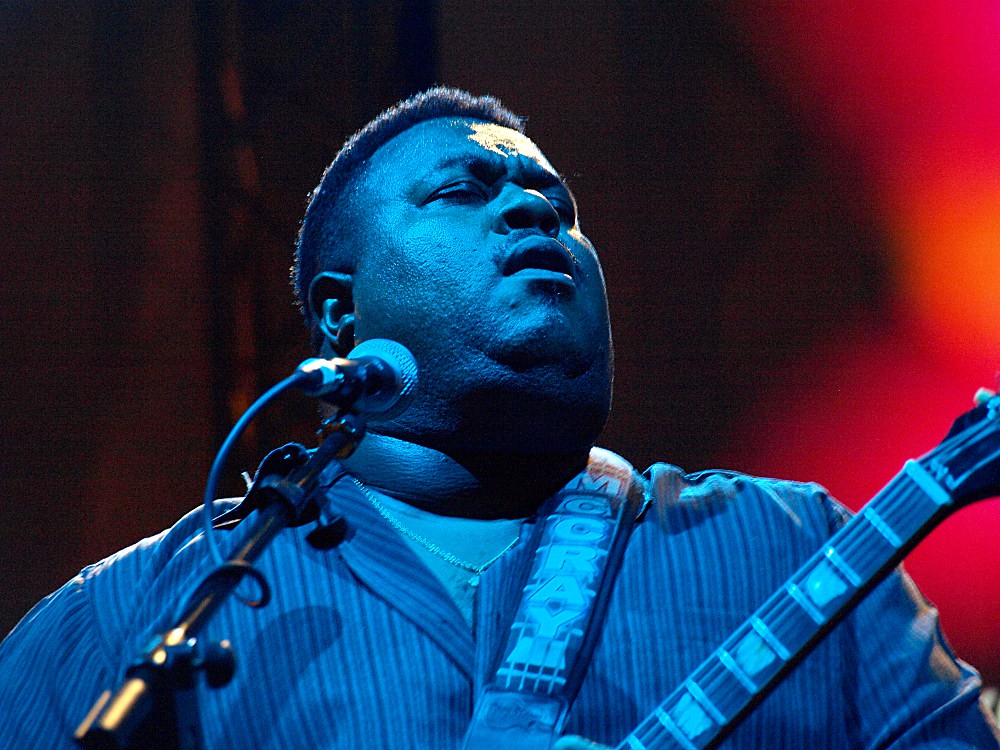
The week was rounded off by Santa Blues, a small blues festival in the capital, Santa Cruz. It's spread across three nights and lasts from around 9.30 till half past midnight. I love all types of music, but there's something about good blues which just reaches deep inside my soul. Unfortunately it doesn't quite reach my feet and my natural rhythm is akin to Steve Martin's at the start of The Jerk. This year's festival was particularly good with ace performances from Larry McCray and especially Kenny Neal as well as some decent support bands.

Santa Blues is quite a special end to a magical week on Tenerife and here's an even more amazing thing about the week. Everything I've mentioned is completely free.

Going Native in Tenerife – It Reaches the Parts Other Guide Books Don't

Thursday, 10 June 2010

Tenerife North V Tenerife South – But What about the East and the West?

A comment on the previous blog mentioned the east and the west of Tenerife and asked what about Los Gigantes?

That blog was about visitors’ general perceptions of Tenerife – which sometimes are condensed into simplified questions about north and south and as a result don’t paint an accurate picture of the island as a whole.

It would be possible to write reams and reams about why to talk about the island in terms of points of the compass can be misleading when taken out of context. There are far more complex issues involved that go beyond the differences in climate; although climate does usually play a role, but not in a 'is it nice enough to sunbathe' sort of way.

So what about the east and the west?

First the west. There is a world of difference between the western towns on the northern side of the Teno Mountain range and those on the southern.

In many ways the resorts on the south west coast are a microcosm of the Los Cristianos, Las Américas and Costa Adeje area.
Just as Los Cristianos existed as a tiny fishing community before tourism, so did Puerto Santiago. Los Gigantes and Playa de la Arena, like Las Américas and Costa Adeje, are the invention of developers and didn’t exist before a hotel was built. Think about this, Playa de la Arena in English simply means ‘sandy beach’.

It doesn’t mean that they’re not nice places to visit or live; they enjoy the best of Tenerife’s sunshine. However, in days gone by noblemen, wealthy merchants and artists chose the towns on the other side of the mountain range to set up home. It’s on the north western coast in places like Buenavista del Norte, Los Silos and Garachico that travellers can still discover a Tenerife that wasn’t created to satisfy the demands of the tourist industry.

In many ways the other end of the island, the east, is even more interesting. The capital Santa Cruz and former capital, La Laguna are located there (well…north east) and that metropolitan area is home to the greatest concentration of residents on the island. But you wouldn’t know that from much of what you read about Tenerife in tourist brochures or even in the British media.

La Laguna was an ecclesiastical centre and a seat of learning. Its old quarter is a World Heritage Site and is full of beautifully preserved colonial architecture. But that doesn’t mean it’s simply a haven for people who like old buildings and museums. It is home to the university and bars and restaurants exude the youthfulness and vibrancy that you find in university towns. Santa Cruz, the political and business hub of the island, is no different – there’s a reason why most major music concerts take place in the capital. Look in the Spanish press at live music venues and you’ll hardly see a mention of tourist resorts, instead listings will be mainly in these two places…even though Las Américas is the place dubbed the nightlife centre of Tenerife.
In nearly every way, Santa Cruz and La Laguna are the true centres of Tenerife’s world…but not when it comes to tourism. In tourism terms they just don’t hold the same draw as the resorts and that can make them almost invisible to many visitors.

Here’s a little fact which really illustrates how La Laguna’s role in tourism has changed with the rise of mass tourism. In 1864, there were at least six hotels in La Laguna. Nowadays, with all the millions of visitors that descend annually on these shores, there are a grand total of two.

It’s interesting that what attracted the artists, explorers and adventurers holds limited interest for the majority of the mass tourist market. On the bright side, it means that those who still possess a spirit of exploration and adventure have much to discover away from the sun, sand and sangria scene.

Thursday, 3 June 2010

Tenerife North v Tenerife South – How Can You Tell if You’re a Northerner or a Southerner?

A question that is regularly asked by first time visitors to the island is ‘what’s the difference between the north and south of Tenerife?’

It’s important to understand what people are normally actually asking by this. What they really mean is ‘what’s the difference between the southern resorts and the northern ones?’ As there is only one main northern resort, that really means the southern resorts and Puerto de la Cruz.

I make this distinction because there is a massive difference between the main southern resorts (Los Cristianos, Costa Adeje & Playa de las Américas) and the towns in the hills behind them.

The most popular answer is the weather and whilst there’s no denying that there are differences, it isn’t the only one, or necessarily the most important. You can sunbathe in both the north and south of Tenerife at anytime of the year. There’s even a place in the north called Puntillo del Sol because it’s rare that the sun doesn’t shine on it. But the weather is generally better in the south (from a sunbathing rather than an agricultural point of view).
The big difference is in what’s on offer and the character of the opposing sides of the island. Las Américas/Costa Adeje offers beaches, water sports, international dining, very diverse entertainment, lively clubbing and all the mod cons of a resort developed to meet the needs of visitors ranging from those looking for cheep ‘n’ cheerful fun in the sun to those looking for more sophisticated dining and entertainment. Only having existed since the second half of the 20th century the area doesn’t have a sense of history or traditional architecture.

Puerto de la Cruz has been around for centuries and therefore does have a sense of history and traditional old buildings, but not the levels of grand colonial architecture found in places like La Orotava or La Laguna.  It was a town, or more accurately a port, first and foremost and because of that its streets exude a completely different atmosphere from those of Costa Adeje. Like the southern resorts, there are plenty of restaurants to choose from, only in Puerto most are Spanish or Canarian; however, nightlife is a different kettle of fish. Many people think that it’s low key – not exactly an accurate assumption. The difference is that the nightlife is aimed at the local population, so a lot of live music bars don’t get going until late and aren’t frequented by most visitors. Much of the nocturnal fun is provided at open air fiestas. There are beaches (black sand), but no real water sports.

Whether you’d prefer south or north depends on personal preferences and what you want from a holiday. I have plenty of friends who like both. There are ex-pats who live in the south of the island who enjoy spending weekends in the north and there are many Canarios who head south for weekends. But some people are definitely only suited to one or the other. The question is how do you know for sure which is for you whether for a holiday or for longer?

I have a litmus test; however, you have to visit Puerto de la Cruz to be able to apply it.

Stand for a few moments at Puerto’s harbour at 10am on any morning. If you do and think ‘okay, so what?’ the chances are you’ll enjoy the main southern resorts more. And if you’re more suited to the north…you’ll know it at that very moment.

Monday, 24 May 2010

It's Like Tenerife Before Tourism

I'm a nosey bugger, I admit it; it's probably something to do with being a writer. I listen in to conversations all the time. I don't mean that if I'm sitting at the next table in a restaurant, I'll be leaning across trying to catch what you're saying, but if something is said which sets off the 'interesting' alarm, my ears lock on to the conversation.

One recurring conversation I hear on a semi-regular basis concerns Tenerife and the affect tourism has had on the island.

Recently in Masca I heard two British couples discussing the charming hamlet. One of them had been before and commented that it had lost some of its charm since it became a popular tourist attraction.

Not having been to the place before it became a tourist attraction, I wouldn't know about that. But Masca still holds bucket loads of charm as far as I'm concerned. The money that the tourists bring help it to remain an immaculate thriving little hamlet.

Last week I visited another very picturesque hamlet in a valley, but the difference with this one was that there were no tourists and most of the houses in the village were abandoned. Its downfall was partly to do with the rise of tourism on the coast way below.

I think it's an interesting comparison. Two beautiful rural locations; one arguably saved by tourism, the other possibly destroyed by it.

Another thing I heard recently was from someone who had just been to La Gomera.

“It's what Tenerife was like before tourism,” was how the person described it.

I've heard and read this a number of times and have got to confess that I'm not sure what it really means. Think about the biggest tourist developments in the south of Tenerife. What was there before tourism?

I've got a great little guidebook for Tenerife from 1969 which lists accommodation around the island. On the south coast there are only a handful of places in Los Cristianos, Las Galletas and El Médano and that was it. No Las Américas or Costa Adeje. They didn't exist; they're not towns which have been turned into resorts. There was nothing there and there definitely wasn't green countryside and quaint little farms. So not like La Gomera at all.

Tourism has clearly had an enormous impact on Tenerife, but it has on all the islands. There are valleys in La Gomera which are almost deserted because families have left to work in the tourist industry. I wonder if families from La Gomera visit Masca, think of the abandoned hamlets they hail from and comment, 'it's just like La Gomera before tourism.'
If anyone really believes that La Gomera is like Tenerife was before tourism, continue into the next valley beyond Masca, or take a tour of the Anaga Mountains, veering off down roads signposted to places like Afur or Batán. The truth is there are plenty of parts of Tenerife that are still exactly like Tenerife before tourism.

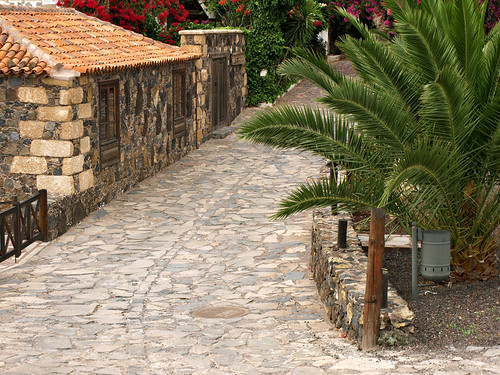
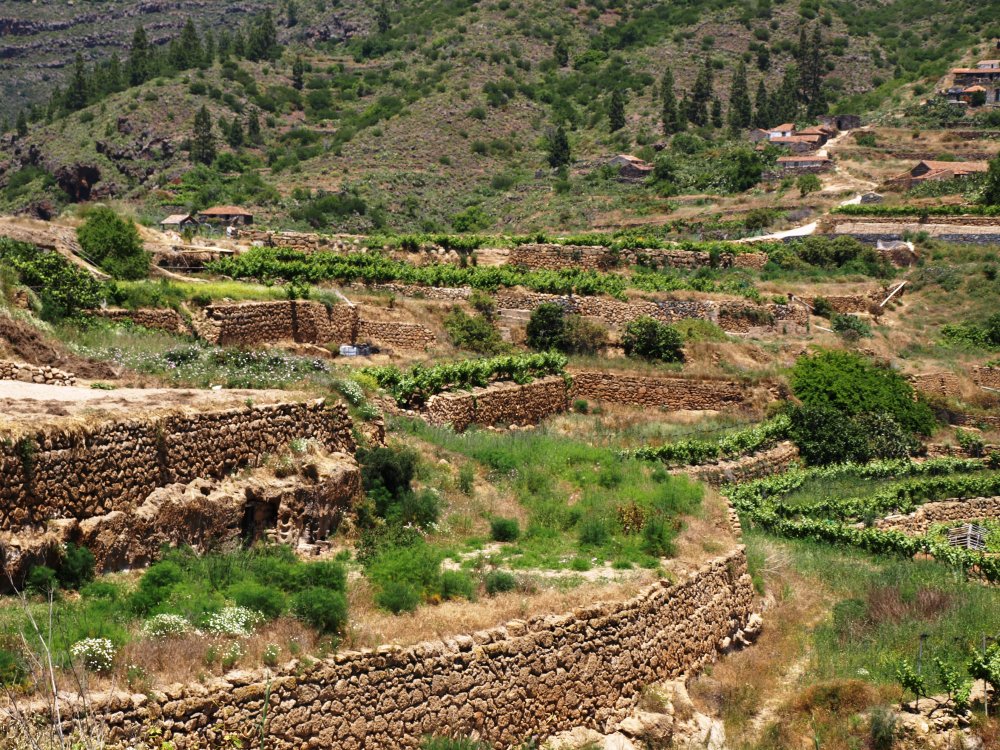
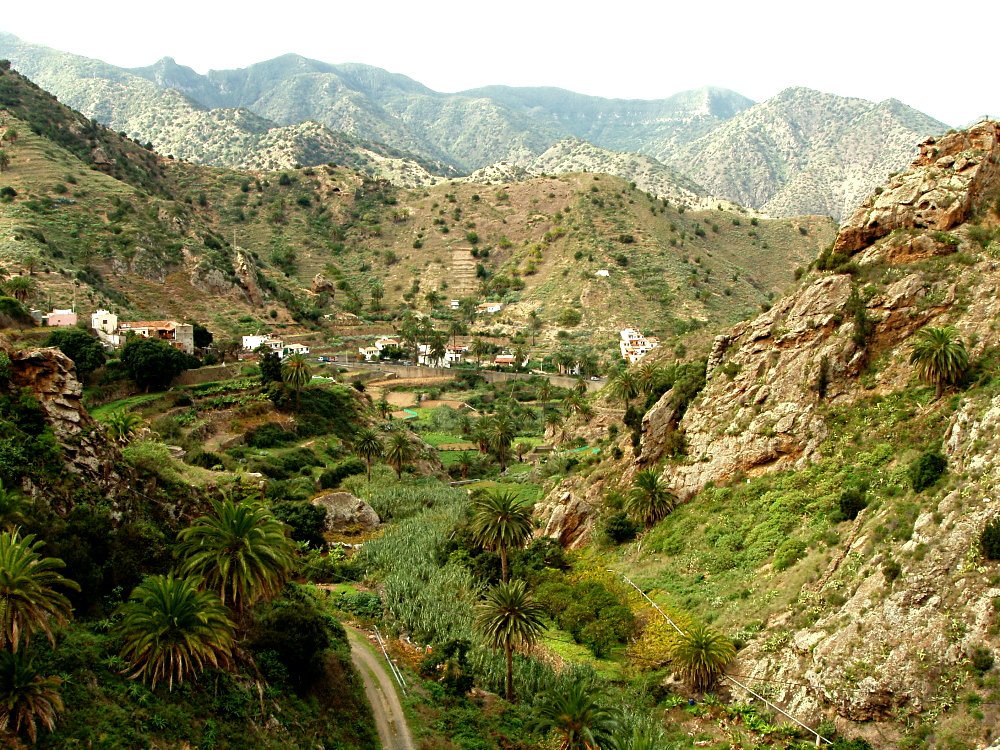
So here's a little test - which of the photos above are La Gomera and which are Tenerife?

Monday, 10 May 2010

Nightlife in Tenerife – Going Down the Local

I don't know about other people in other parts of Tenerife, but we don't really have a bar that we call our 'local' in Puerto de la Cruz.

There is a bar that we watch football in, The Beehive, and we've made some good friends in there over the years, but we don't go there to socialise at night.

One of the main reasons for this is that when we go out at night, it's usually to a fiesta or to see a band. In Puerto de la Cruz, and a lot of the north of Tenerife, much of the nightlife takes place outdoors, especially around Plaza del Charco and the harbour.

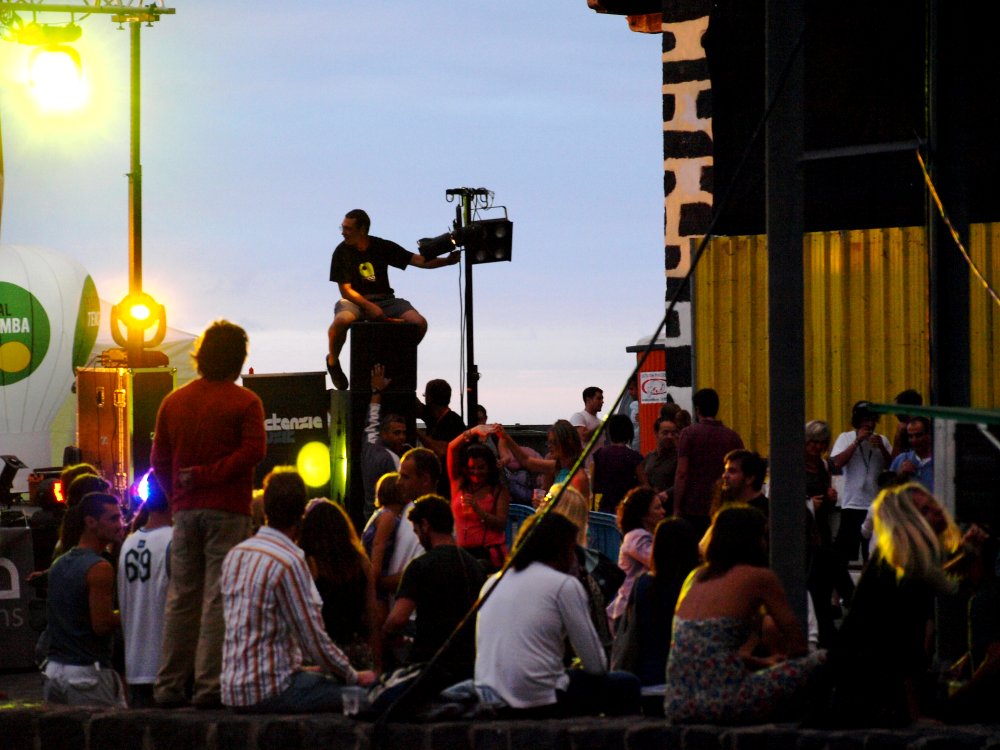
A couple of weeks ago it was a rock fiesta, this weekend it was a Brazilian DJ festival at the harbour; part of the Tensamba  festival taking place across the north of Tenerife. When you've got events like this on offer, sitting in a bar doesn't really compete...especially as these events usually come with beer and combinado kiosks attached.
On Saturday we spent most of the evening sitting by the old customs house of Casa de la Aduana whilst DJs from São Paulo brought a distinctly Brazilian beat to the town, multi-coloured strobe lights danced across the harbour waters and the beautiful people came out to samba on the sidewalk.

We did drag ourselves away from the scene to eat at one point, but not too far from the action. We were completely undecided about what to eat until a waiter wafted a wagon-wheel sized pizza under our noses as we passed the perennially popular Tasquita beside the harbour.

May is a quiet month as far as tourists are concerned in Tenerife, but there was only one unoccupied table outside the Tasquita – and that was only because it was the only one which didn't have a view of Real Madrid strolling to victory on the bar's external wide-screen TV. Not being Real fans, we weren't bothered about that, so grabbed it before it was snatched up.

The Tasquita is one of those fantastic people watching spots and as we tucked into our wagon-wheel pizzas we commented on the Saturday night outfits on parade around the plaza beside us; teenage girls dressed to kill on heels as long as their legs, lads with Derek Zoolander haircuts and gawky expressions, cool dudes with dreadlocks and hippy chicks in black smocks and shocking pink tights. Around the perimeter of the bar's pavement tables up to twenty people lingered to cheer and groan at the football match on the telly whilst electric bossanova beats drifted up from the harbour.

It might be one of our quiet months, but the town's heart beat out strongly with an addictive rhythm.

We might go to the Beehive to watch football; head to The Majestic to see the wonderful Bitter & Twisted show (incontinence pants essential); down an icy cool cerveza or two on the even cooler terrace (in style not temperature) at Limbo or clink mojito glasses at hot & sultry Azucar, but if you were to ask me what our local was, I'd guess I'd have to say it was the same as most Portuenses (people from Puerto) – and that would be Plaza Charco and the harbour.

That is simply where it's all happening.