Tuesday, 29 June 2010

The Best Week to Visit Tenerife, Rock, Blues, Bonfires & Quaint Fiestas

If someone wanting to experience the cream of what Tenerife has to offer asked me when would be the best time for holidays on Tenerife, I wouldn't have to think for even a second before answering.

Unfortunately if you're reading this and planning a visit to Tenerife in the near future, my answer is going to be really annoying as it's the week that has just passed.

The period around the official start of summer is always full of activities as well as two of the best festivals on Tenerife's fiesta calender...and you can guarantee that the weather is going to be hot.

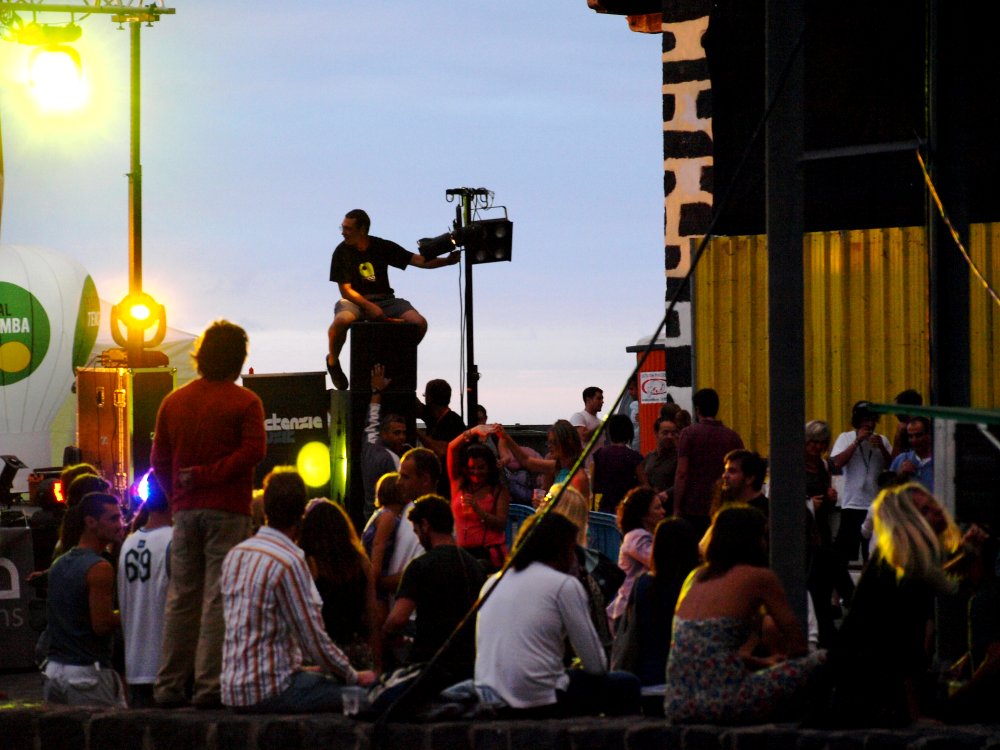
The week started with the European Day of Music in Puerto de la Cruz when seven bands welcomed in the summer beside the town's picturesque harbour. I've said it over and over again; if you visit a place like Puerto, you aren't going to see the best of it in a pub which caters for the British – apart from maybe The Majestic, which is a scream. On a Saturday night it's always worth checking out what's going around Plaza Charco and the harbour as that's where the real action takes place.

Anyone who does feel the need to spend their Saturday nights in a bar could always opt for the Queen Bee or the Frigata beside the harbour and get the best of both worlds.

This time of year is also a great time for walking on Tenerife. Temperatures are high, but not oppressively so and we always try to fit in a jaunt in the countryside in between the hectic nocturnal activities. This year we explored a part of the north coast near us and found fishermen's shacks beside beautiful clear rock pools.

The highlight of the week is the midsummer celebrations on the night of San Juan. These take place all over the island and are a real insight into Tenerife's true character. Even in the main resorts in the south like Playa Los Cristianos and Las Vistas, Canarian families head to the beach to make wishes and bathe in the sea after midnight for good health and fertility. It seems crazy, but I've sort of become hooked on the tradition and even though we spent this year exploring celebrations along the north coast, we had our swimming cossies under our clothes. There was no way I was going to risk the wrath of the gods, so wherever we were after midnight I was determined that my body would be bathed with the magic waters. As it turned out we ended up back at the best San Juan party on the island at Playa Jardín in Puerto de la Cruz. A rock band kept the beach bouncing as we picked our way through the crowds to the shoreline where we waited for a break in the waves so that we wouldn't be dragged to San Borondón (mythical Canarian island which turns up on San Juan)as we doused our skin in the waters.

Another magical thing in Tenerife is the time, it disappears at frightening speed and one second it's midnight, the next it's 2am. Not late for a fiesta, but it is when you want to watch el baño de las cabras (bathing of the goats) just over six hours later. Don't be put off by any misinformed suggestions that this is a cruel tradition, it isn't. It might be noisy and messy, but it isn't cruel.

One thing I learned at this year's annual goats' day out is to keep your eyes on the asses at all times. Not a bad life mantra come to think of it. As I was getting up close and personal with a few billies, a tethered mule decided to eat my trousers and clamped its jaws around my left knee.  El baño de las cabras - cruel to goats, no; cruel to photographers, yes.
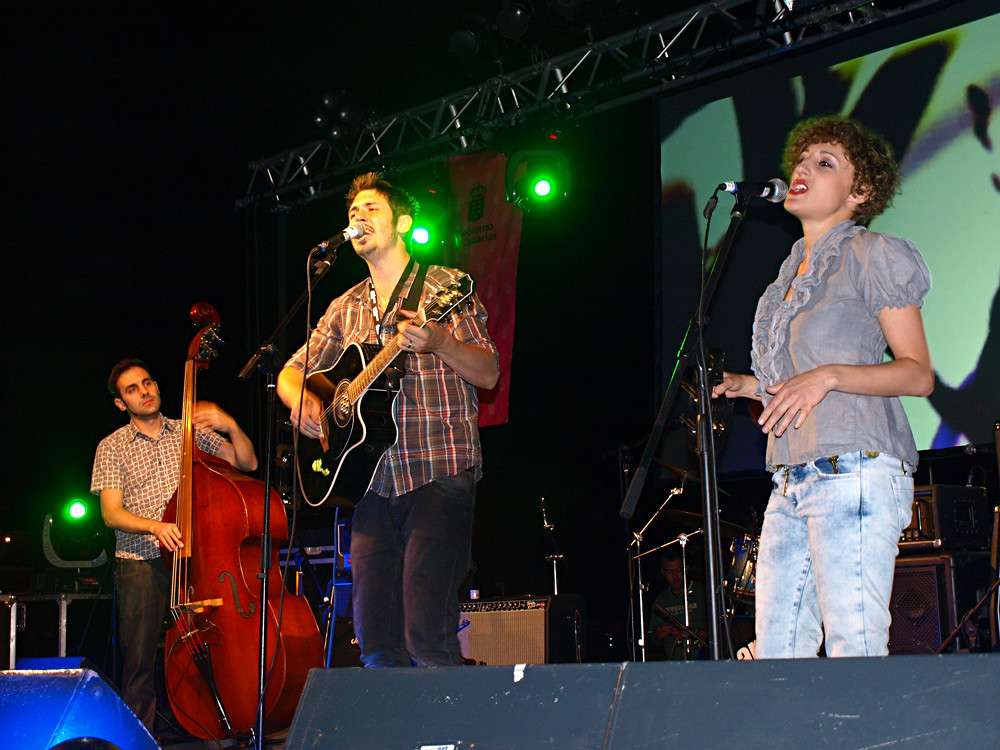
The week was rounded off by Santa Blues, a small blues festival in the capital, Santa Cruz. It's spread across three nights and lasts from around 9.30 till half past midnight. I love all types of music, but there's something about good blues which just reaches deep inside my soul. Unfortunately it doesn't quite reach my feet and my natural rhythm is akin to Steve Martin's at the start of The Jerk. This year's festival was particularly good with ace performances from Larry McCray and especially Kenny Neal as well as some decent support bands.

Santa Blues is quite a special end to a magical week on Tenerife and here's an even more amazing thing about the week. Everything I've mentioned is completely free.

Going Native in Tenerife – It Reaches the Parts Other Guide Books Don't
Thursday, 10 June 2010

Tenerife North V Tenerife South – But What about the East and the West?

A comment on the previous blog mentioned the east and the west of Tenerife and asked what about Los Gigantes?

That blog was about visitors’ general perceptions of Tenerife – which sometimes are condensed into simplified questions about north and south and as a result don’t paint an accurate picture of the island as a whole.

It would be possible to write reams and reams about why to talk about the island in terms of points of the compass can be misleading when taken out of context. There are far more complex issues involved that go beyond the differences in climate; although climate does usually play a role, but not in a 'is it nice enough to sunbathe' sort of way.

So what about the east and the west?

First the west. There is a world of difference between the western towns on the northern side of the Teno Mountain range and those on the southern.

In many ways the resorts on the south west coast are a microcosm of the Los Cristianos, Las Américas and Costa Adeje area.
Just as Los Cristianos existed as a tiny fishing community before tourism, so did Puerto Santiago. Los Gigantes and Playa de la Arena, like Las Américas and Costa Adeje, are the invention of developers and didn’t exist before a hotel was built. Think about this, Playa de la Arena in English simply means ‘sandy beach’.

It doesn’t mean that they’re not nice places to visit or live; they enjoy the best of Tenerife’s sunshine. However, in days gone by noblemen, wealthy merchants and artists chose the towns on the other side of the mountain range to set up home. It’s on the north western coast in places like Buenavista del Norte, Los Silos and Garachico that travellers can still discover a Tenerife that wasn’t created to satisfy the demands of the tourist industry.

In many ways the other end of the island, the east, is even more interesting. The capital Santa Cruz and former capital, La Laguna are located there (well…north east) and that metropolitan area is home to the greatest concentration of residents on the island. But you wouldn’t know that from much of what you read about Tenerife in tourist brochures or even in the British media.

La Laguna was an ecclesiastical centre and a seat of learning. Its old quarter is a World Heritage Site and is full of beautifully preserved colonial architecture. But that doesn’t mean it’s simply a haven for people who like old buildings and museums. It is home to the university and bars and restaurants exude the youthfulness and vibrancy that you find in university towns. Santa Cruz, the political and business hub of the island, is no different – there’s a reason why most major music concerts take place in the capital. Look in the Spanish press at live music venues and you’ll hardly see a mention of tourist resorts, instead listings will be mainly in these two places…even though Las Américas is the place dubbed the nightlife centre of Tenerife.
In nearly every way, Santa Cruz and La Laguna are the true centres of Tenerife’s world…but not when it comes to tourism. In tourism terms they just don’t hold the same draw as the resorts and that can make them almost invisible to many visitors.

Here’s a little fact which really illustrates how La Laguna’s role in tourism has changed with the rise of mass tourism. In 1864, there were at least six hotels in La Laguna. Nowadays, with all the millions of visitors that descend annually on these shores, there are a grand total of two.

It’s interesting that what attracted the artists, explorers and adventurers holds limited interest for the majority of the mass tourist market. On the bright side, it means that those who still possess a spirit of exploration and adventure have much to discover away from the sun, sand and sangria scene.

Thursday, 3 June 2010

Tenerife North v Tenerife South – How Can You Tell if You’re a Northerner or a Southerner?

A question that is regularly asked by first time visitors to the island is ‘what’s the difference between the north and south of Tenerife?’

It’s important to understand what people are normally actually asking by this. What they really mean is ‘what’s the difference between the southern resorts and the northern ones?’ As there is only one main northern resort, that really means the southern resorts and Puerto de la Cruz.

I make this distinction because there is a massive difference between the main southern resorts (Los Cristianos, Costa Adeje & Playa de las Américas) and the towns in the hills behind them.

The most popular answer is the weather and whilst there’s no denying that there are differences, it isn’t the only one, or necessarily the most important. You can sunbathe in both the north and south of Tenerife at anytime of the year. There’s even a place in the north called Puntillo del Sol because it’s rare that the sun doesn’t shine on it. But the weather is generally better in the south (from a sunbathing rather than an agricultural point of view).
The big difference is in what’s on offer and the character of the opposing sides of the island. Las Américas/Costa Adeje offers beaches, water sports, international dining, very diverse entertainment, lively clubbing and all the mod cons of a resort developed to meet the needs of visitors ranging from those looking for cheep ‘n’ cheerful fun in the sun to those looking for more sophisticated dining and entertainment. Only having existed since the second half of the 20th century the area doesn’t have a sense of history or traditional architecture.

Puerto de la Cruz has been around for centuries and therefore does have a sense of history and traditional old buildings, but not the levels of grand colonial architecture found in places like La Orotava or La Laguna.  It was a town, or more accurately a port, first and foremost and because of that its streets exude a completely different atmosphere from those of Costa Adeje. Like the southern resorts, there are plenty of restaurants to choose from, only in Puerto most are Spanish or Canarian; however, nightlife is a different kettle of fish. Many people think that it’s low key – not exactly an accurate assumption. The difference is that the nightlife is aimed at the local population, so a lot of live music bars don’t get going until late and aren’t frequented by most visitors. Much of the nocturnal fun is provided at open air fiestas. There are beaches (black sand), but no real water sports.

Whether you’d prefer south or north depends on personal preferences and what you want from a holiday. I have plenty of friends who like both. There are ex-pats who live in the south of the island who enjoy spending weekends in the north and there are many Canarios who head south for weekends. But some people are definitely only suited to one or the other. The question is how do you know for sure which is for you whether for a holiday or for longer?

I have a litmus test; however, you have to visit Puerto de la Cruz to be able to apply it.

Stand for a few moments at Puerto’s harbour at 10am on any morning. If you do and think ‘okay, so what?’ the chances are you’ll enjoy the main southern resorts more. And if you’re more suited to the north…you’ll know it at that very moment.

Monday, 24 May 2010

It's Like Tenerife Before Tourism

I'm a nosey bugger, I admit it; it's probably something to do with being a writer. I listen in to conversations all the time. I don't mean that if I'm sitting at the next table in a restaurant, I'll be leaning across trying to catch what you're saying, but if something is said which sets off the 'interesting' alarm, my ears lock on to the conversation.

One recurring conversation I hear on a semi-regular basis concerns Tenerife and the affect tourism has had on the island.

Recently in Masca I heard two British couples discussing the charming hamlet. One of them had been before and commented that it had lost some of its charm since it became a popular tourist attraction.

Not having been to the place before it became a tourist attraction, I wouldn't know about that. But Masca still holds bucket loads of charm as far as I'm concerned. The money that the tourists bring help it to remain an immaculate thriving little hamlet.

Last week I visited another very picturesque hamlet in a valley, but the difference with this one was that there were no tourists and most of the houses in the village were abandoned. Its downfall was partly to do with the rise of tourism on the coast way below.

I think it's an interesting comparison. Two beautiful rural locations; one arguably saved by tourism, the other possibly destroyed by it.

Another thing I heard recently was from someone who had just been to La Gomera.

“It's what Tenerife was like before tourism,” was how the person described it.

I've heard and read this a number of times and have got to confess that I'm not sure what it really means. Think about the biggest tourist developments in the south of Tenerife. What was there before tourism?

I've got a great little guidebook for Tenerife from 1969 which lists accommodation around the island. On the south coast there are only a handful of places in Los Cristianos, Las Galletas and El Médano and that was it. No Las Américas or Costa Adeje. They didn't exist; they're not towns which have been turned into resorts. There was nothing there and there definitely wasn't green countryside and quaint little farms. So not like La Gomera at all.

Tourism has clearly had an enormous impact on Tenerife, but it has on all the islands. There are valleys in La Gomera which are almost deserted because families have left to work in the tourist industry. I wonder if families from La Gomera visit Masca, think of the abandoned hamlets they hail from and comment, 'it's just like La Gomera before tourism.'
If anyone really believes that La Gomera is like Tenerife was before tourism, continue into the next valley beyond Masca, or take a tour of the Anaga Mountains, veering off down roads signposted to places like Afur or Batán. The truth is there are plenty of parts of Tenerife that are still exactly like Tenerife before tourism.

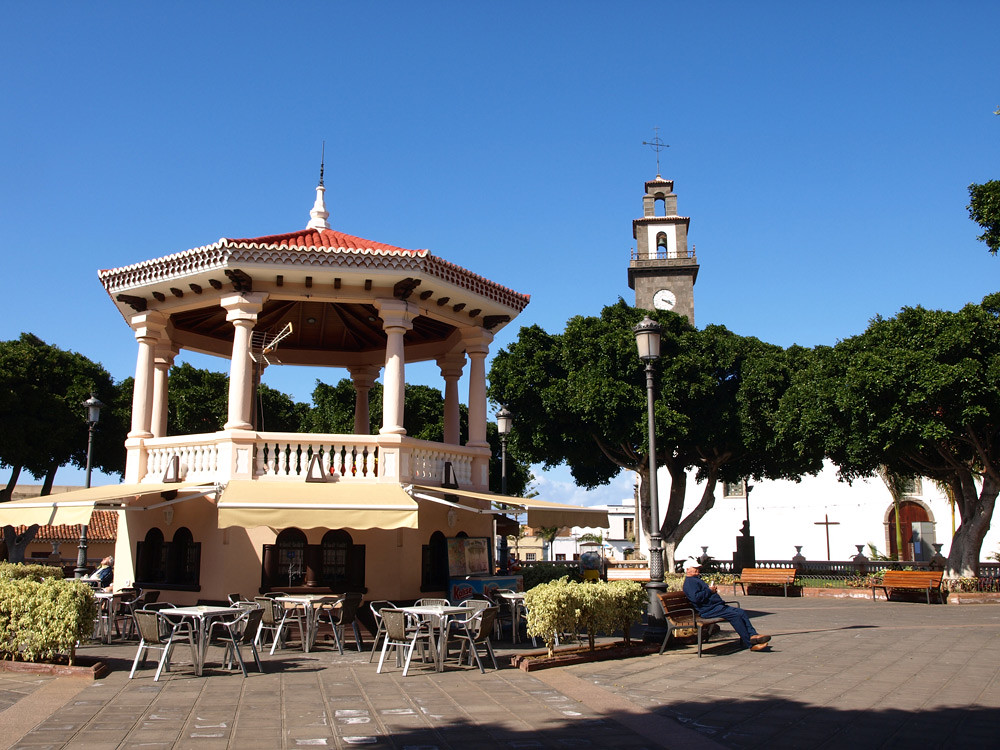
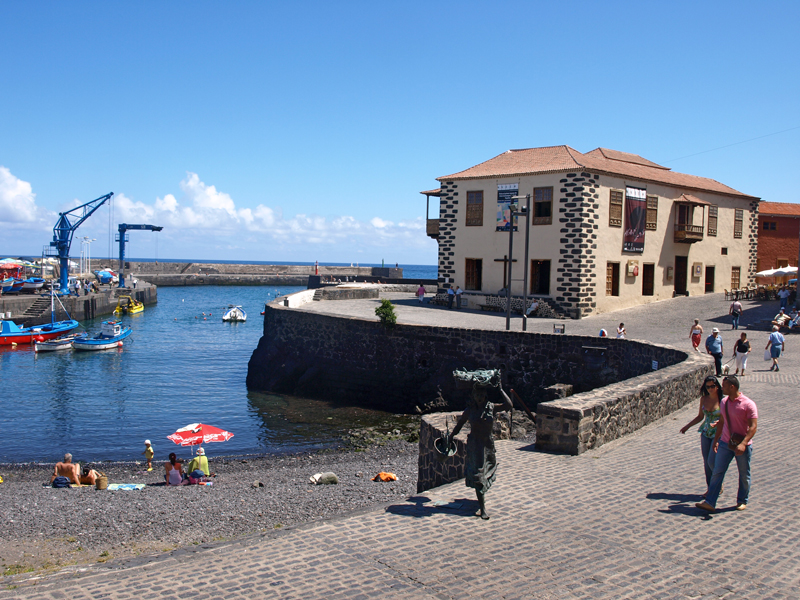
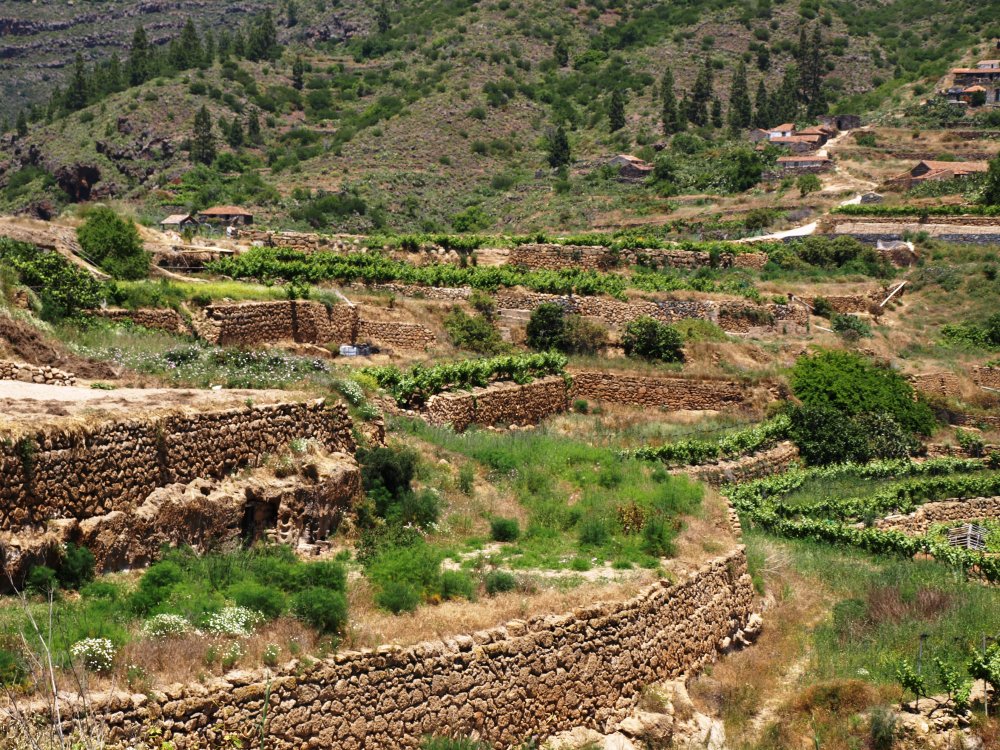
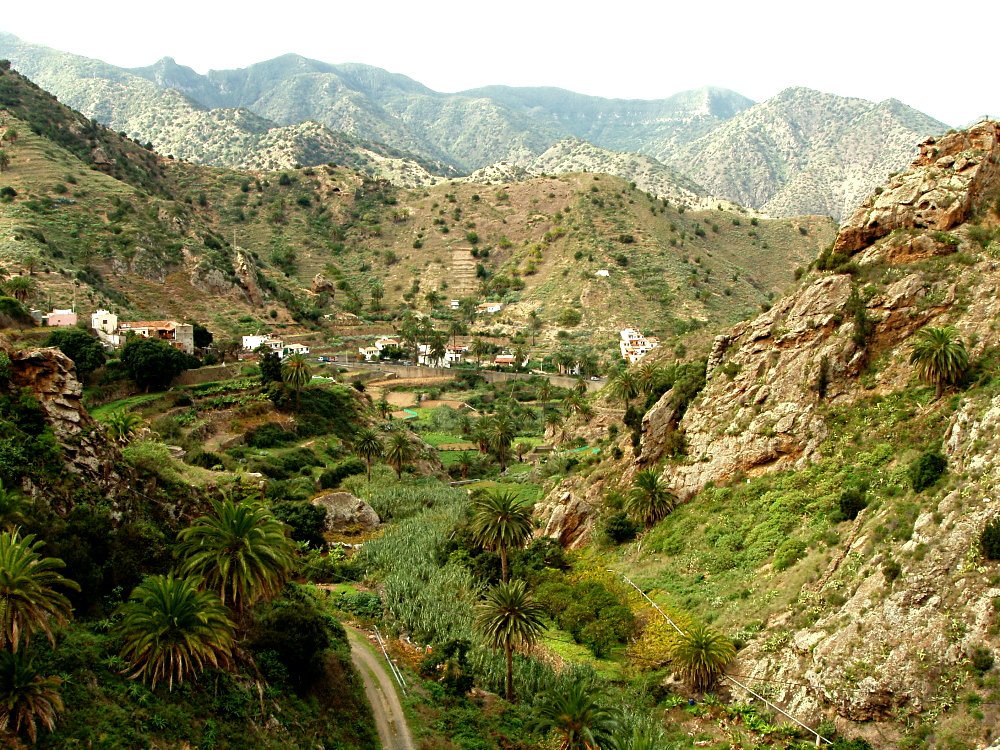
So here's a little test - which of the photos above are La Gomera and which are Tenerife?

Monday, 10 May 2010

Nightlife in Tenerife – Going Down the Local

I don't know about other people in other parts of Tenerife, but we don't really have a bar that we call our 'local' in Puerto de la Cruz.

There is a bar that we watch football in, The Beehive, and we've made some good friends in there over the years, but we don't go there to socialise at night.

One of the main reasons for this is that when we go out at night, it's usually to a fiesta or to see a band. In Puerto de la Cruz, and a lot of the north of Tenerife, much of the nightlife takes place outdoors, especially around Plaza del Charco and the harbour.

A couple of weeks ago it was a rock fiesta, this weekend it was a Brazilian DJ festival at the harbour; part of the Tensamba  festival taking place across the north of Tenerife. When you've got events like this on offer, sitting in a bar doesn't really compete...especially as these events usually come with beer and combinado kiosks attached.
On Saturday we spent most of the evening sitting by the old customs house of Casa de la Aduana whilst DJs from São Paulo brought a distinctly Brazilian beat to the town, multi-coloured strobe lights danced across the harbour waters and the beautiful people came out to samba on the sidewalk.

We did drag ourselves away from the scene to eat at one point, but not too far from the action. We were completely undecided about what to eat until a waiter wafted a wagon-wheel sized pizza under our noses as we passed the perennially popular Tasquita beside the harbour.

May is a quiet month as far as tourists are concerned in Tenerife, but there was only one unoccupied table outside the Tasquita – and that was only because it was the only one which didn't have a view of Real Madrid strolling to victory on the bar's external wide-screen TV. Not being Real fans, we weren't bothered about that, so grabbed it before it was snatched up.

The Tasquita is one of those fantastic people watching spots and as we tucked into our wagon-wheel pizzas we commented on the Saturday night outfits on parade around the plaza beside us; teenage girls dressed to kill on heels as long as their legs, lads with Derek Zoolander haircuts and gawky expressions, cool dudes with dreadlocks and hippy chicks in black smocks and shocking pink tights. Around the perimeter of the bar's pavement tables up to twenty people lingered to cheer and groan at the football match on the telly whilst electric bossanova beats drifted up from the harbour.

It might be one of our quiet months, but the town's heart beat out strongly with an addictive rhythm.

We might go to the Beehive to watch football; head to The Majestic to see the wonderful Bitter & Twisted show (incontinence pants essential); down an icy cool cerveza or two on the even cooler terrace (in style not temperature) at Limbo or clink mojito glasses at hot & sultry Azucar, but if you were to ask me what our local was, I'd guess I'd have to say it was the same as most Portuenses (people from Puerto) – and that would be Plaza Charco and the harbour.

That is simply where it's all happening.

Wednesday, 21 April 2010

Music on Tenerife – When Salsa Becomes Boring

The first time I heard a live band on Tenerife, it sent a shiver of excitement through my  body. I can't remember where it was or when, but it involved a group of lads dancing with pumped up energy on a stage as they belted out a sound which had a mix of of hot sultry nights, cool mojitos and dark eyed and olive thighed women shaking their booties for all they were worth. It felt sensually exotic.
Six and a bit years further down the line, the same sound feels about as exotic as having fish and chips in Whitby. Now don't get me wrong, I enjoy fish and chips in Whitby and I still enjoy Latino/salsa music...but I also like to hear something different every now and again.

Like most people, the Canarios in general are creatures of habit. They know what they like and they stick to it like superglue. I've blogged before about Carnaval having three types of music – live salsa bands for the older revellers; DJs playing electro salsa for the younger revellers and for the teenagers, a nice pop salsa beat.

Every traditional fiesta I go to features live salsa music...except when it's traditional Canarian (of which there are about three original songs with an endless combination of variations).

I'm human and therefore prone to animal instincts and so am also a creature of habit. But the same thing over and over, whether it's food, music or anything for that matter, can become tedious.
Thankfully on Tenerife there are also loads of other places to get a music hit especially during summer months. There are classical concerts, rock, jazz, blues and proper old school trance. I've seen Robert Cray, Echo and the Bunnymen, Irish up and coming rockers The Deans and the wonderful Orishas (okay, they're Cuban Hip Hop with a Latino beat, but they have quite a unique sound) as well as a whole load of lesser known names. So I do okay for getting to listen to a wide range of live music, but here's the bit that is very revealing about the Canarian culture.

A couple of weeks ago we went to a concert that was part of the FMAC festival. This is a festival dedicated to alternative music. The alternative music in this case was jazz funk and indie rock. There you go, it's official - indie rock isn't part of the mainstream music scene here, it's classed as alternative music.

The other thing that speaks volumes is this. Thousands upon thousands of people always turn out for the traditional fiestas and the streets are filled with people of all ages salsa-ing the nights away.
For all the bands (with the exception of Orishas) I mentioned before and the alternative music festival the other week, the turn out was closer to a couple of hundred. The majority of local people simply want salsa, salsa and then some more salsa.

In truth it's admirable. It shows a culture which is rock solid and sticking to the things it likes, completely unaffected by half a century of mass tourism. Salsa might have lost some of its spice for me, but as long as there are plenty of 'alternative' festivals to maintain the musical balance, I'm a happy bunny – I can have the best of both worlds.

However, next time you're up north at a trad fiesta and there's some guy in the crowd shouting 'Give us some Kings of Leon,' you'll know who it is.

Sunday, 4 April 2010

Huge Travel Discounts in the Canary Islands

(Photo - the twin peaks of La Palma above Santiago Del Teide)
There’s something quite fascinating for me in being part of an archipelago; it’s like being a part of a family – a solid, geographic family. And I think it gives a place a very special feel and character.
When you spend your holidays on Tenerife, Lanzarote, Fuerteventura or Gran Canaria, it’s highly likely that it never even occurs to you that you’re one island in seven; why should it? The same is true for most of us ex-pat residents of the islands. In some respects, it’s a bit like living anywhere else; you tend only to be aware of your own immediate surroundings- the ‘my back yard’ syndrome.

Look out over the south and west coasts and you can’t fail to see Tenerife’s nearest neighbour, La Gomera. Look harder on a clear day and you’ll see the twin peaks of La Palma lying to La Gomera’s northwest and the tip of El Hierro lying off her south coast. Off the north east coast of Tenerife the mass of Gran Canaria is clearly visible on many days.

But to really get a feel for being a part of the Canarian Archipelago, drive up to Teide National Park on a clear day (September and October are the best months for crystal clear visibility) or take the cable car to just below the peak and experience the awesome beauty of all four of those islands, and sometimes five if Lanzarote sneaks onto the eastern horizon, lying in their crystalline azure waters; brothers and sisters to Tenerife.
It’s said that if you climb to the peak of Mount Teide for sunrise, on a clear morning you can see all six satellite islands. Unfortunately when Jack and I did it, we could only see five and it’s not like you can just ‘pop back again’ the next day to see if you can get all six this time. Still, it’s definitely on my ‘things I still want to see’ list.

So, with all those other islands lying tantalisingly in such close proximity, each completely diverse from the others, why not take the opportunity to do a little family visiting?

Having recently had reason to do a bit of island hopping for both business and pleasure purposes, it strikes me that some regular visitors to Tenerife may not realise that they’re entitled to reduced fares on all the inter-islands transport; ferries and aircraft.
And by way of illustration of just how valuable that discount is, here are some price comparisons (all prices are from websites for one day return journey on 5th April 2010):

Tenerife to La Gomera:    ‘Tourist’ rate        ‘Resident’s Rate’
Fred Olsen Express               €60.92                  €30.44
Naviera Armas                     €46.31                  €23.17
Binter Canarias Airlines          €137.70                €70.70

How do I qualify for the discount?
Anyone who lives in the Canaries, either full time or for some part of the year is entitled to resident’s discount.
You’ll need a copy of your NIE (Número de Identificación de Extranjeros) which is the number you applied for when you made any kind of large purchase (a car, apartment etc. or set up standing orders for rent, utilities etc) and your Certificate of Residence of the EU.

If you haven’t already got your Certificate of Residence, it’s well worth taking the time and trouble (the usual assorted bureaucratic hurdles) to get it, as it entitles you to all sorts of other discounts like entrance to parks and facilities; the cable car; excursions etc.

With your discount under your belt – there’s really no excuse not to go out and revel in the fact that you’re part of an archipelago – a gloriously beautiful one.